Tips for Write Up in NIFT Situation Test

1. Doodles your concept first.
2. Rough sketch your idea on the write up paper by using the materials given in the test packet by NIFT.
3. Write the Keywords which come in your mind while doodling your 3D model.
4. Think during your preparation a nice and creative and easy memorable TOPIC/TITTLE for your 3D model. TOPIC must be not cross 3 to 4 words.
5. Don’t use your Running Handwriting in the write up. It should be in neat and Clean Handwriting so it can be easily readable for the invigilator.
6. Topic should be in CAPITAL LETTER AND IT SHOUD BE BOLD AND UNDERLINE.
7. After writing your title, try to give one EMOTIONAL THOUGHT to your write up from your experience which you learn during your study and from your daily life. It can be in one line or two lines.
8. Put your concern towards awareness by your 3D models.
9. Try to target specially youth/kids for your 3D model. Because they are the most powerful target to change the world.
10. Try to show the interest why you chosen the particular topic from the given 3 topics.
11. Write all the concern for your topic POINT WISE.

A. Why you picked up particular materials for your 3D model design.
B. How they aesthetically approaching to your 3D model.
C. The SHAPE you are using in the model what they locate.
D. The COLOUR Paper which you picked for your 3D model how they are giving the dynamics to your 3D model.
E. The Texture Paper or other different materials which you used in your 3D model how they aesthetically approaching your 3D model.
F. You can paste the materials small pieces before briefing your idea towards the materials, shapes, texture, patterns.

12. After finishing your write up try to put your concern regarding your believe in your design which you are making in the NIFT Situation test. How your 3D product will help people to spread more awareness in the society.

FORMAT FOR NIFT SITUATION TEST

ROLL NO                 …………………………………….               NAME     ……………………………………………………………


CREATIVE TITLE   …………………………………………………………………………(In Capital letters)


Brief  your Idea towards your 3D model.


……………………………………………………………………………………………………………………………………………………


……………………………………………………………………………………………………………………………………………………


…………………………………………………………………………………………………………………………………………………..

Brief your Materials which you used in your 3D model.


Pest small pieces of                                                                      Write the concern towards materials

materials/shapes/colour

everything hear                      


…………………….                                                         …………………………………………………………………………………


…………………….                                                         ………………………………………………………………………………..


…………………….                                                         ………………………………………………………………………………..


…………………….                                                         ………………………………………………………………………………..


……………………                                                          ………………………………………………………………………………


……………………                                                          ………………………………………………………………………………


……………………                                                          ……………………………………………………………………………..


Write your social concern towards your 3D model.


……………………………………………………………………………………………………………………………………………

……………………………………………………………………………………………………………………………………………………


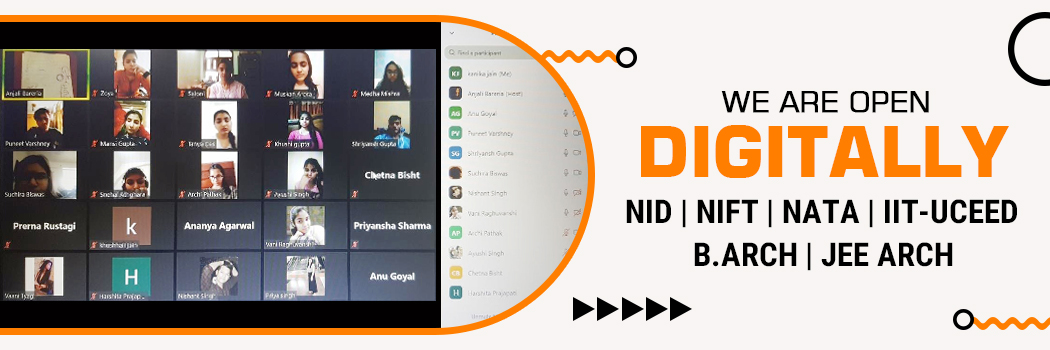
PahalDesign Education Private Ltd. comes up with its Online platform called Pahal Live. Pahal Design is the Original Pioneer in conducting coaching classes for NID, NIFT, NATA, UCEED, CEED, JEE ARCH, Fine Arts, BFA, MFA and Portfolio Preparation for Overseas and Private Colleges. These Online classes can be attended live from the comfort of your home. The program is delivered through a series of pre-scheduled live and recorded online lectures and has extensive course coverage. The objective behind these classes is to provide a real classroom experience at your home and time, thus allowing the students to raise any doubts or queries and have them answered instantly by our expert mentor. Even if you get further any doubt after live session, you may get them answered from the faculty or expert via the dedicated Telegram/WhatsApp group of your batch.

Top 10 Reasons Why You Should Join Pahal Live?

1. 21 Years of Academic excellence
2. Experienced Faculty from NID, IDC, NIFT, SPA, DCA, J J College, CEPT
3. Doubt Clearing Sessions
4. Weekly Feedback
5. Live Interactive Classes
6. Recorded Video Lectures
7. Study Material
8. Study Online at Home
9. Replay a missed class
10. Mock Test Analysis and Report

FAQ

  1. Online Live classes are new for Creative, how can I choose from Live Interactive classes or recorded video lectures?

Live interactive classes are useful for the students who can be available during the respective classes as per the schedule and two-way communication is possible here between the mentors and students. Recorded video lectures are focused on students who have a difficulty concerning stable internet access, which is required for the live classes.

  1. As we are enrolling for Online Live classes, is it possible to get few classroom sessions at nearest centre of Pahal?

Yes, it is possible, you need to book your slot with prior information to respective nearest centre of Pahal.

  1. Do we have Weekend and Weekdays Batch available for Online Live classes?

Yes, Students can go for weekdays and weekend classes as per their convenience. The classes can be attended on desktop, laptop, tablet, or even mobile phone with a stable internet connection.

  1. As Pahal LIVE is a virtual class so do we have the same environment as the classroom programme?

 The experts who take the Classes in the live sessions online are experienced in their respective field. They ensure that the same discipline is maintained throughout the live sessions. Here, the physical presence of a teacher does not impact the overall standard of the course.

  1. Do we have Live Demo?

Yes, we have interactive live demo classes for students so that they can also get an idea about the environment is same as classroom. Mostly students have confusion in their mind that how creative and drawing classes can be conducted through Online mode, and these doubts can be easily cleared once they join live demo class with our expert mentors.

  1. Do we get hard copy study material apart from E-assignment /booklets?

We provide hard copy study material through courier, where they can solve assignments for GAT, DAT and Aptitude. For Creative and Drawing questions they can draw on sketch book and get feedback of their creative work.

  1. Is it possible to get back up classes in case we miss the scheduled class?

The interactive live sessions get recorded which students enrolled in the course can access later. If the student has missed any of the lectures, they can simply access the course material with the recorded lectures and during doubt session classes they can clear doubts related to the topics.

  1. How will Parents monitors their ward performance report?

 We have a SPR (student’s performance report) which will be shared with students and their guardian on monthly basis. At any point of time guardian can book the virtual interaction/meetings with mentors and counsellors in order to get 360-degree review about their child.

  1. Can we switch from LIVE classes to regular classroom program?

Yes, you can switch the mode of learning at your convenience. This requires 30 days prior information at your end and approval from Pahal corporate office

  1. How can we attempt Mock Test Series ?

 You will get the access to Pahal Test where you can attend the mock test for respective course you are enrolled.

  1. Does the online test contain any predefined schedule?
    Yes, some tests are having predefined schedule which can be given on the date or after the starting date & before the end date. While some tests don’t have any predefined schedule, students can start giving exams just after the registration & payment confirmation.   
  2. Is there any free test or demo test?
    Yes, some tests are free, which are available just after the registration process is completed. 
  3. How many times I can give the same test?
    There will be only one-time opportunity to perform any particular test. To repeat the same test twice, students need to send a request to administrator for the same. 
  4. For any other query or concern whom should I contact?

      You can reach us at 8800-22-6864 or mail at corporate@pahaldesign.com  and our team will call you within 24 hours.

   16. What are the payment options?
There are two payment options, students can choose either online or offline mode of payment as details are given below 

Online Mode of Payment:Users have to select online mode of payment. Website will redirect user for secure payment process where they can make payment by Net Banking or by different types of card like cash card, master card, credit card etc. As payment is done, it confirmation will be sent on user registered email. Users are advised to make payment online to save time & to make process easy & fast. 

ICICI Bank 
Account Name: PahalDesign Education Pvt. Ltd.
A/C Number: 039605003471
IFSC Code: ICIC0000396
MICR: 110229058
Branch: South Ext. Part-2, South Delhi, New Delhi

HDFC Bank 
Account Name: PahalDesign Education Private Limited
A/C Number: 50200041276761
IFSC Code: HDFC0001092
MMID: 9240882
Branch: Defence Colony 2, South Delhi, New Delhi

UPI / GOOGLE PAY / PAYTM Payment

NOTE:


ABOUT IIAD

Indian Institute of Art and Design in collaboration with Kingston University, London offers new-age design education to its students. The studio-based learning and hands-on Industry experience offers students the knowledge and exposure required to understand how the creative  industries function. Design is an intellectual subject that requires strong creative, visual, logical and critical thinking abilities and keeping that in mind, IIAD ensures a student-teacher ratio of 15:1 so that each student receives equal attention and assistance.

AFFILIATIONS

IIAD offers all its BA (Hons) degree programmes and MA* degree programmes in collaboration with Kingston School of Art, Kingston University, London. The courses at IIAD meet the quality standards and requirements of Kingston University. Both institutions share their resources and best practices for the development of the curriculum and the delivery of the courses. The academic collaboration with Kingston School of Art is the founding stone of the design pedagogy being taught at IIAD. It is known to be a pioneer in art and design education since the 1870s and has helped evolve the Institute’s comprehensive curriculum since inception. To help you understand the nature of this relationship and its benefits to the students, Kingston University has published a document answering queries from students and their families.

Are the degrees offered by IIAD recognised in India?

Yes, the degree offered at IIAD are recognised nationally and internationally. Apart from the degree offered by Kingston University, London, IIAD also offers a B.Voc degree in collaboration with Lingaya’s University which is UGC recognised. The degrees provided by IIAD can help the students in:

  • Applying at international institutes/universities for further education
  • Applying for jobs globally
  • Applying at UGC recognised universities in India for further education
  • Applying for Government jobs in India after completion of their degree programme

FEE AND SCHOLARSHIP

Students who successfully complete the iDAT Entrance Test will be eligible to apply for the Scholarship. The Scholarship form will be made available along with the offer letter.

Cycle – April / May 2020

Announcement Details
Forms Available from   September 2019
Exam Centers and Dates   Online 
Friday 24th April, Saturday 25th April

For Undergraduate programmes : The IIAD Entrance Examination comprises the following parts/rounds based on the programme of interest. For Fashion Design, Communication Design and Interior Architecture & Design Applicants: iDAT – IIAD Design Aptitude Test

  • Part A – Written Test
  • Part B – Studio Simulation

 Part A – Written Test IIAD’s Design Aptitude Test (written) tests the applicants’ logical reasoning, creative thinking and visual aptitude. This is a written exam of 2 hours 30 mins. Students who appear in the written iDAT must also appear for a Studio Simulation at the IIAD campus in New Delhi. Part B – Studio Simulation ‘Studio simulation test’ is a two-hour activity in which a group of 10-15 students are given a brief along with the material. Candidates are required to create a 3D model using that material under the supervision of the faculty. They will be judged on the basis of teamwork, creative thinking, innovation & problem-solving skills.  

For Fashion Business Management Applicants: iMAT – IIAD Management Aptitude Test

  • Part A – Written Test
  • Part B – Personal Interview

IIAD’s Management Aptitude Test (iMAT) tests the applicants’ language, logical reasoning and analytical thinking. This is a written exam of 2 hours. Students who appear in written iMAT must also appear for a Personal Interview at the IIAD campus in New Delhi.   For Postgraduate programmes : The IIAD Entrance Examination comprises the following parts/rounds based on programme of interest.   For Fashion Design iDAT – IIAD Design Aptitude Test

  • Part A – Written Test
  • Part B – Personal Interview

iDAT is IIAD’s Design Aptitude Test which will test applicants’ logical reasoning, creative thinking and visual aptitude. This is a written exam of 2 hours 30 mins. Students who appear in the written iDAT must also appear for a Personal Interview at the IIAD campus in New Delhi.   For Fashion Business Management Applicants: iMAT – IIAD Management Aptitude Test

  • Part A – Written Test
  • Part B – Personal Interview

iMAT is IIAD’s Management Aptitude Test which will test applicants’ language, logical reasoning and analytical thinking. This is a written exam of 2 hours. Students who appear in written iMAT must also appear for a Personal Interview at the IIAD campus in New Delhi. The Sample Papers can be obtained upon successful completion of the Application Form.

B.A. (Hons.) Communication Design

The BA Communication Design programme (validated by Kingston University) is delivered through a mix of project work, group work, lectures, seminars and assignments. The program offers a common introductory experience during the first year of specialisation, followed by two years of selected and more specialised study driven by interests and preferences. The programme concludes with a Major Design Project in the last semester of the final year, this is an amalgamation of the specialisation and is defined by student’s own path as a future designer.

B.A. (Hons.) Interior and Architecture Design

At the intersection of architecture, interior and experience design, the Interior Architecture and Design programme provides a multi-disciplinary approach to transforming existing spaces and places.  In increasingly Urban Environments, the emphasis on the design and working of a building, inside out, has gained tremendous importance. The programme focuses on examining existing structures and transforming their interior through relevant design interventions and renovations that give existing buildings a new life.  

Unlike courses in interior design and decoration, the Interior Architecture programme focuses on spatial design and detailing, adaptive reuse and retrofitting as well as architectural addition and refurbishment.  

The programme addresses a wide range of spaces, from domestic to retail, institutional to  commercial and set/production design to issues of conservation. Whether designing a structure, situation or event, the interior architect responds to how society interacts with, and inhabits space.

B.A. (Hons.) Fashion Design

Fashion Design as a discipline has evolved from being a whimsical, wearer-led, phenomenon to an industry where designers and labels establish and guide customer preferences. A formal degree in Fashion Designing is ideal for students with a penchant for the creative fields and a desire to explore their artistic and technical skills in in an industry valued north of $3 trillion globally. The programme will help students explore their creative identity and refine it further as they unpack the myriad layers of the discipline. Fashion Design being a practical discipline demands rigorous hands-on exposure with a mature awareness of the complexities of the world of Fashion. Students graduating from the programme will be able to use design thinking and creative problem-solving strategies to create appealing, sustainable and responsible fashion for a rapidly evolving industry.

TRANSFER TO IIAD

IIAD accepts applications for transfer to IIAD for the design programme (in either Fashion Design, Communication Design or Interior Architecture & Design) from students who have successfully completed previous year(s) of their design degree/diploma programme from a nationally or internationally recognized Design Institute.

PEARL ACADEMY EXAM PATTERN AND PROCEDURE TO APPLY

QUALIFICATION
UNDERGRADUATE LEVEL

On successful completion of the program at Pearl Academy, students receive a Professional Diploma*. Pearl Academy facilitates enrolment of students for Indian and International Bachelor’s degree from recognized institutions.


(a) International Bachelor’s Degree
Students have an option to obtain an internationally recognized Bachelor’s Degree by pursuing programs at our academic partner universities i.e. University of Derby, UK or Torrens University, Australia or Manchester Metropolitan University, UK or Nottingham Trent University, UK. Pearl Academy facilitates enrolment to these universities. The application for international degree shall be subject to assessment / evaluation and acceptance of students prior learning by the partner academic university. The decision of the partner academic university shall be final & binding.


(b) Indian Bachelor’s Degree

All students at Pearl Academy Delhi NCR and Mumbai campuses are provided with an opportunity to pursue Bachelor of Arts from School of Open learning Delhi University and Institute of Distance and Open learning Mumbai University respectively. Students at Jaipur campus are provided with an opportunity to pursue Bachelor of Vocational Studies (B.Voc.) from Rajasthan ILD Skills University. Pearl Academy facilitates enrolment to these universities. For further details, students are requested to connect with Career Advisors.

*Pearl Academy is not a degree-granting institution and is not accredited by UGC, AICTE or any other regulatory body. Pearl Academy is also affiliated with Sector Skills Councils under National Skills Development Corporation (NSDC), an initiative by Ministry of Skills, Government of India, for following certifications. Students will have the added option for availing these qualifications. More certifications will be added.

Sector Specific Certificate
Fashion Design UG & PG Apparel Made-ups & Home Furnishing Sector Skill Council (AMHSSC)
Fashion & Lifestyle Business Management UG
Fashion Business
(Marketing & Merchandising)
PG
Textile Design UG & PG
Global Luxury Brand Management UG
Luxury Brands PG
Design (Fashion and Textiles) MA Diploma
Graphics and Communication Design UG & PG Media & Entertainment Skill Council (MESC)
Fashion Communication UG & PG
Professional Photography 11 Months Professional Certificate
Fashion Media Makeup 11 Months Professional Certificate Media & Entertainment Skill Council (MESC)


POSTGRADUATE LEVEL

On successful completion of two-year PG program, a student is awarded a Post Graduate Professional Diploma** from Pearl Academy. All students get to learn latest international trends through masterclasses by global experts and can also avail international student exchange programs. They get an opportunity to attend workshops, visit local factories / manufacturing units and interact with the industry experts of international market. **Pearl Academy is not a degree-granting institution and is not accredited by UGC, AICTE or any other regulatory body.
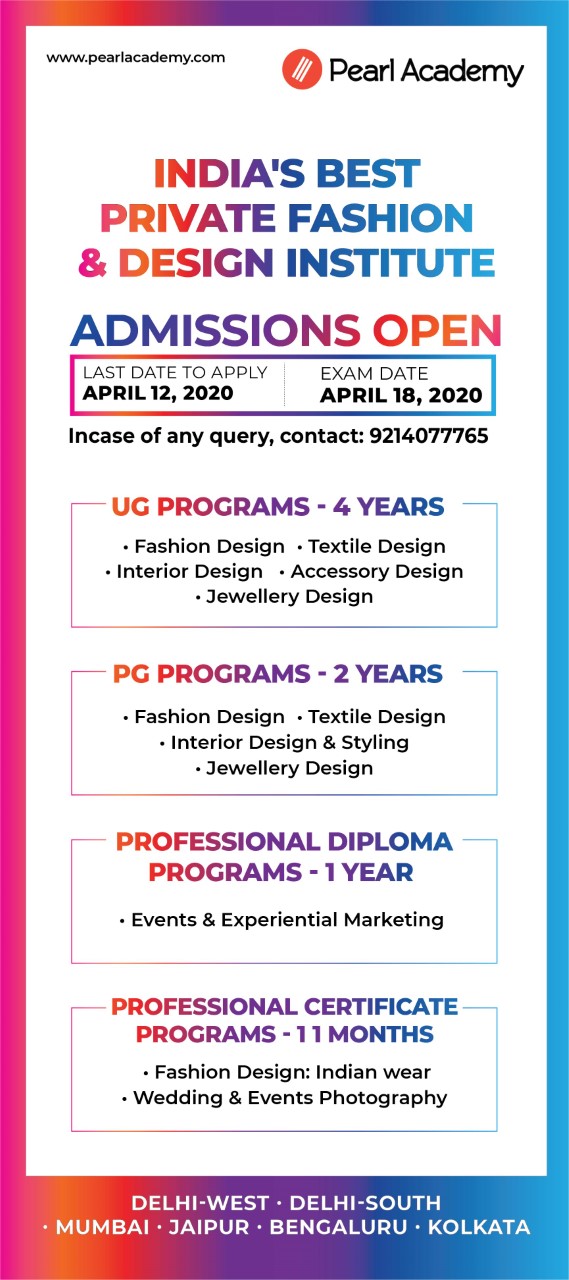
ADMISSION CYCLES

To cater to an increase in volume of applications each year and widen its pan-India reach, Pearl Academy offers more than 1 cycle for admission.
Please refer to the website www.pahaldesign.com for exam cycle dates.

We look out for talented, intelligent, ambitious students who are prepared to put in their best efforts to build the foundation for a successful and fulfilling career. We nurture young people who have the determination, potential and commitment to be the industry captains of tomorrow. So when we are assessing you, we will be particularly evaluating your career focus, your creative and aesthetic sense, your level of commitment and energy, your potential as a team member, your ability to handle stress, and of program, your communication skills.

For this purpose, every applicant passes through a 2-Stage Admission Process of written entrance test, followed by a personal interview. Applicant for 11 Months Professional certificate Program passes through 1 stage Admission process of Personal Interview only.

EXAMINATION PATTERN
UG Programs
Design Stream: General Proficiency Test (GPT) – 60 minutes and Design Aptitude Test (DAT) – 120 min Business Stream: General Proficiency Test (GPT) only – 60 minutes
Media & communication (Journalism & Entertainment): General Proficiency Test (GPT) – 60 minutes and Media Aptitude Test (MAT) – 120 minutes

PG Programs

Design Stream: General Proficiency Test (GPT) – 60 minutes and Design Aptitude Test (DAT) – 120 minutes
Business Stream: General Proficiency Test (GPT) only – 60 minutes
Media & communication (Journalism & Entertainment): General Proficiency Test (GPT) – 60 minutes and Media Aptitude Test (MAT) – 120 minutes

11 Month Professional Certificate Program

Personal Interview only

ELIGIBILITY FOR UG & PG

For 3 Year / 4 Year UG program: 10+2, in any discipline.
For 2 Year PG Program: Graduate in any discipline from a recognized university. For 11 Months Professional Certificate Program: 10+2 or equivalent

SELECTION OF CANDIDATES

Candidates are selected on Merit, based on their performance in the Written Admission Test and Personal Interview/ Portfolio Evaluation. The Program and centres will be awarded to successful candidates on the basis of their rank & preference. For 11 Months Professional certificate Program – Selection is based on personal interview only. Result is declared for each Admission cycle as per the cut off / grades and weights for norms decided by Admission / Selection committee of the Academy. Admission letter will be available online only with fee structure and necessary information. Candidates will be required to pay the fees by stipulated date to secure their seats. In case a successful candidate does not pay the fees within the stipulated date, the seat will be offered to other deserving candidates. In case a candidate is not selected or has not been offered his / her desired program or centres in any Admission Cycle, it is open to the candidate to apply afresh for the next Admission Cycle. The norms of the Selection are the sole prerogative of the Pearl Academy Admission / Selection Committee and the decision of the Admission / Selection Committee and the Management in matters concerning the admission process and selection will be final.

FOR WAIVER OF GENERAL PROFICIENCY TEST (GPT) & DESIGN APTITUDE TEST (DAT)

(A) Only for UG Program Applicants
NATA score card 2019 / 2020

Applicable only for 4 Year UG Program in Interior Design and 4 Year UG Program in Product Design Please enclose a copy of NATA scorecard 2019 / 2020 (whichever applicable) along with the Application form.

(B) Only for PG Program Applicants

Applicants of PG Program are entitled to waiver of General Proficiency Test (GPT) only if they have registered a minimum score as mentioned below. Such applicants will be called for Personal Interview directly subject to submission of valid scores.
• AIMA – MAT (2019 / 2020)

  • CAT (2019 / 2020)
    • GMAT (2019 / 2020)
    The minimum scores of MAT / CAT / GMAT for a waiver of GPT required are as under: • Minimum MAT score of 500 or above
    • Minimum CAT score of 60 percentile or above
    • Minimum GMAT score of 450 or above

Please Note: Applicants seeking waiver of GPT are required to enclose an attested copy of the relevant valid Score Card along with this application form. In the absence of a copy of valid score card, waiver will not be accepted and the applicant will be required to appear in the GPT. Applicants of Design stream, who are allowed waiver of GPT, will be required to appear for Design Aptitude Test (DAT). Applicants of Media & Communication (Journalism & Entertainment) programs, who are allowed waiver of GPT, will be required to appear for Media Aptitude Test (MAT). Decision to grant waiver of GPT rests with Pearl Academy. Waiver of GPT is not automatic.

Merit cum Means Scholarships – New Entrants

The Merit cum means scholarship is constituted to support the deserving economically less privileged students joining Pearl Academy’s programs each year. The objective of this Scholarship is to support & reward new students constrained by economic limitations.
The Merit cum Means Scholarship (new entrants) is applicable only to the new enrollments / students of regular UG / PG Programs at the time of admission.

The Scholarship provides partial waiver of tuition fee. It waives payment of partial tuition fee only for the current academic year in the following categories:
a. Category-1 : 50% waiver of Tuition fee
b. Category-2 : 25% waiver of Tuition fee

Eligibility

Eligibility for Merit cum Means Scholarship (new entrants) is as under:
a. Annual gross parental / family income from all sources – maximum Rs. 8,00,000/- (INR Eight

lakhs only)
b. Academic Performance in 12th / Graduation ( Min 55% marks ) c. Academic Performance in Entrance test
d. Preference towards of single parents.

NOTE: There is no concept of automatic renewal. The students need to apply afresh in subsequent academic year.

Merit Scholarship (Existing Students – Program Toppers)

Merit Scholarship will be awarded annually only to meritorious students progressing to L1, L2 & L3 of 4-Year UG programs and Year-2 of PG program.
• The Merit Scholarship provides partial waiver of tuition fee. It waives payment of 60% of the tuition fee only for the current academic year

Eligibility

The meritorious students of the respective cohorts at each campus, subject to class size of minimum 30 students. Merit Scholarship for the program topper is subject to achieving minimum prescribed standard of achievements as under:
• 4- Years UG program: Min 70% marks in previous academic year at Pearl.

  • 2 – Years PG program : Min 70% marks in previous academic year at Pearl
    • No disciplinary proceedings against the proposed awardee
    *In case class strength is below 30, then classes across campuses will be combined ( minimum total eligible for scholarship is 25 ) and the Merit Scholarship will be awarded to the Topper (1st Rank) subject to achieving the minimum performance criteria as follows:
    • 4 Years UG program : Min. 70% marks in previous academic year at Pearl Academy
    • 2 Years PG program : Min. 70% marks in previous academic year at Pearl Academy

Means Scholarship (Existing Students)
The scholarship is constituted to support the deserving students who are economically less privileged or are facing unforeseen economic crisis each year. The objective of this Scholarship is to support & reward our students constrained by economic limitations.
There are two categories:

  • Category 1 : 70% waiver of Tution fee
  • Category 2 : 50% waiver of Tution fee
    Eligibility
    Annual gross parental / family income from all sources – maximum Rs. 8,00,000/- (INR Eight lakhs only)
    b. Preference to wards of Single parents
    c. Min. 70% attendance and Min. 55% marks
    d. No disciplinary proceedings against the proposed awardee
    Based upon the above stated eligibility criterions, individual applicants shall submit their request for Means Scholarship in the prescribed format along with the following documents:
    a. In case of student having single parent, please provide relevant supporting documents
    b. A copy of Parents ITR, Form 16 / Balance sheet of last 2 years as proof of income.
    NOTE: There is no concept of automatic renewal. The students need to apply afresh in subsequent academic year
    Notwithstanding anything under this Scholarship, Pearl Academy’s Management has right to continue or abandon this Policy going forward at any given point in time, without any prior written intimation. The Scholarship committee will be the final deciding authority for all scholarship decisions. Please note that this communication is without prejudice to any rights of Pearl Academy and this communication should not be considered as waiver of any rights of Pearl Academy in your favor.
    General Rules for Scholarship (all categories)
  • A student will be eligible for award of only one type / scheme of Scholarship in a given Academic Year.
  • The scholarship amount will be adjusted against student fees. No cash or separate cheques will be Issued in Student’s favour.
  • In case of a joint winner / topper, the topper will be decided based on the exact LAM including 2 decimal points (before rounding off).
  • The Academy reserves the rights to edit /modify / change or update the contents of this policy at its sole discretion.
  • The students will be covered under the latest revisions of the policies irrespective of their year of joining.
  • For all scholarships, decision of the Scholarship committee will be final & binding.
  • In case of withdrawal under Scholarship category, scholarship granted shall get withdrawn and refund shall be granted as per the normal fee structure.

HOW DO YOU APPLY:

ONLINE

Candidates can apply online at www.pearlacademy.com. Guidelines for applying online may be referred for the purpose. The Prospectus is available at Pearl website free of cost.
APPLICATION FEE PAYMENT
There are three options of making payments for application form

Credit Card / Debit Card – Candidates applying online through Credit / Debit card are not required to send print out of the application form.
Cash on Counter – Candidates applying online through Cash mode are required to send print-out of the application form and send it along with the cash amount of `1500. Please paste your recent passport size photograph on the application form, sign it and send it to the below mentioned address along with cash before the last date of form submission.

Demand Draft – Candidates applying online through Demand Draft are required to send print-out of the application form and send it along with the Demand Draft of `1500. Please paste your recent passport size photograph on the application form, sign it and send it to the below mentioned address along with the Demand Draft before the last date of form submission.

Note: Candidates are advised to keep the following ready with them before applying online:
• Credit / Debit Card or Cash on counter OR Demand Draft (Demand Draft must be in favour of “CREATIVE ARTS EDUCATION SOCIETY”, payable at New Delhi)
• Scanned copy of passport size photograph [The photograph must be a recent passport size color picture,

preferably in white background. Photographs with Caps, hats and dark glasses are not acceptable.

The image should be in .jpg format only. Size of file should not be more than 1 MB]. • Scanned copy of valid CAT / MAT / GMAT / NATA score card (if applicable)
• Details of educational qualifications (marks / grade / year of passing etc.)

FOR ANY FURTHER DETAILS GET IN TOUCH WITH OUR TEAM AT 8800-22-6864 / 90311-70312 / 93540-52529



GROUP DISCUSSION & PERSONAL INTERVIEW PREPARATION

NIFT MFM GD PINow, that you have crossed the first hurdle of cracking the written exam, it’s time to focus on the next stage.

NIFT conducts GD/PI for those who have qualified NIFT 1st Phase written exam and group discussion is based on a Case study. GD/PI have a weightage of 30% and it plays a very important role in deciding the NIFT All India Rank. 

Every year for the 2nd round of the Design entrance exams, Premier institutes like National Institute of Fashion Technology  (NIFT), National Institute of Design (NID), etc. may announce the “GROUP DISCUSSION & PERSONAL INTERVIEW ROUNDS” for the admission PG programs as M.Des, MFM, MFTECH. We at Pahal Design, brief you here about GD & PI.

GROUP DISCUSSIONS

Shortlisted candidates for Masters Programs from the written entrance examination are required to undergo Case Study based Group Discussions (GD) and Personal Interview (PI). GD would comprise approximately 15 to 20 minutes of discussion on a case study assigned, on which a panel of experts will assess the candidates on various parameters including:

  1. Conceptual clarity
  2. Knowledge of the topic assigned
  3. The contribution made to the topic
  4. Interpersonal skills
  5. Ability to generate new ideas
  6. Problem-solving approach
  7. Leadership qualities
  8. Effective communication

What Happens at Group Discussion

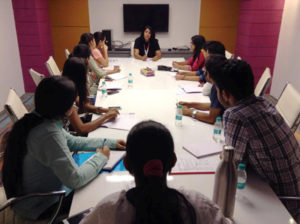
Normally groups of 8-10 candidates are formed into a leaderless group and are given a specific situation to analyze and discuss within a given time limit. The group may be given a Case Study and asked to come up with a solution for a problem. The group may be given a topic and asked to discuss the same. A panel will observe the proceedings and evaluate the members of the group.

BEFORE THE GROUP DISCUSSION

  1. Stock yourself with information-No one knows what the topic of GD is going to be. Hence, it will be a good idea to keep yourself abreast with topics like:

Current Affairs

Current Affairs is something that you have to be thorough with. For this, read newspapers regularly. Understand the recent crises that the world is reeling under, the latest developmental initiatives, the ties between various countries and the like.

Historical topics

Have a fair knowledge about the country’s history and also the history of other countries. The topics may not be specifically from this area, but having historical information will help you cite examples and make references whenever needed.

Arts & Literature 

In these topics, try to have a decent idea about what is popular, who are the leaders in each area, the latest that has happened in these areas. If the topic for GD is from these areas, then you will be in control of the situation, or else you can definitely use the information to draw references.

Data crunching

Do familiarize yourself with important data. Throwing in some data if required in your GD will definitely create an impression among the assessors.

Let’s discuss a few relevant points which one should remember while appearing for a GD. 

  • One needs to know what one’s objective in the group is—- 
  • to be noticed by the panel and to contribute meaningfully in an attempt to help the group reach the right consensus.
  • It’s a test of your problem-solving skills, critical thinking skills, and analytical ability. In other words, they want to assess how you perform and react during a crisis situation.

HOW TO DO IT?

  • You must ensure that the group hears you. If the group hears you, so will the evaluator.
  • You need to be assertive. It depends on you how you steer the group in the right direction, once it gets stuck to something. This gives you the chance to showcase your leadership skills.
  • Most importantly, you have to make your chances. Many group discussion participants often complain that they did not get a chance to speak. The fact is that in no group discussion will you get a chance to speak. There is nothing more unacceptable in a GD than keeping one’s mouth shut or just murmuring things that are inaudible.
  • Another major essential thing is that your contribution to the group should be meaningful. For that, you need to have a good knowledge base.

HOW TO DO IT?

  • You should be able to think logically and hence put forth your ideas cohesively. The quality of what you said is more valuable than the quantity.
  • It doesn’t help if you shout at the top of your voice and speak at great length, what matters most is what you speak and how it creates an impact on the group as well as the evaluators.

3) The last but not the least, most important thing is that you must be clearly seen to be attempting to build a consensus. This shows your ability to work in a team, your ability to adjust yourself in new surroundings and help others in your team to reach a definite conclusion amidst difference of opinions. After all, this is what all Group Discussions aim at: To be able to discuss and arrive at a consensus.

Tips and Tricks to practice during GD

  1. Be positive,
  2. Maintain an erect posture and keep calm,
  3. Be confident, it is the key to success, but never be dominant,
  4. Try to initiate GD at right points and only if you have adequate knowledge on the subject,
  5. Ensure participation with appropriate content and build arguments with facts and figures,
  6. Be sensible and always deliver a relevant speech,
  7. Try to use simple words and speak politely,
  8. While speaking always maintain eye contact,
  9. Listen patiently when others are speaking and never interrupt others speech,
  10. Never stare at Judges during your speech,
  11. Never lose your temper, and
  12. Keep a logical approach during GD
  13. Be Yourself. Be as natural as possible and don’t try to be someone you are not.
  14. Take time to organize your thoughts. Don’t suddenly jump to any conclusion. Think before you speak so that you don’t speak anything irrelevant to the topic being discussed.
  15. Don’t make the mistake of looking at the panel while you are speaking. You are in a Group Discussion and you are expected to discuss among group members, so always look at your group members while you are speaking.
  16. Seek clarifications if you have any doubts regarding the subject, before the discussion commences.
  17. Your body language says a lot about you – your gestures and mannerisms are more likely to reflect your attitude than what you say.
  18. Never try to show your dominance. Be assertive, speak yourself and let others speak as well.
  19. Don’t lose your cool if anyone says anything you object to. The key is to stay objective: Don’t take the discussion personally.
  20. Show your leadership skills. Motivate the other members of the team to speak. Be receptive to others’ opinions and do not be abrasive or aggressive.
  21. Remember, opening the discussion is not the only way of gaining attention and recognition. If you do not give valuable insights during the discussion, all your efforts of initiating the discussion will be in vain.

Sample GD Topics for 2020:

  • How fast fashion brands are contributing to sustainability. Is Sustainability a new trend. 
  • Is Vegan leather a substitute for leather.
  • Comment on the statement “…the fashion world pays lip service to the notion of change because in truth, it hates change. It likes what it sold yesterday, and to make fashion saleable for tomorrow, it will add a few bells and whistles and surround the whole thing with hubba-hubba seduction…”. How retailers and designers will respond to this challenge.
  • How is Budget 2020 impacting Indian Imports and Exports?
  • Role of Artificial intelligence in design. 
  • Zero Technology in fashion Industry
  • “As Consumers are getting older, the fashion searches for the fountain of youth. Not so long ago, young people aspired to look older…. But these days, rather than dressing up…women are dressing young…”. How retailers and designers will respond to this challenge?
  • “Powered by technological innovations, internet, and globalization of fashion, the life span of a fashion trend is reducing drastically.” How retailers will respond to this trend.

Previous year GD Topic:

  1. Can artificial intelligence be creative
  2. Is Entrepreneurship necessity or obligation for the Indian Economy?
  3. Communication is the lifeline of the fashion Industry. Do you agree or disagree?
  4. Have Social networking sites influenced the buying behavior of customers?
  5. What does a hand textile company should do to keep their sal up with the latest technology?
  6. Should E-commerce and retail outlets have the concept of “exclusive rights”?
  7. Is E-commerce is feasible to sell handicrafts or not?
  8. Are Indian consumers are not ready for experimental marketing?
  9. Manager Policies could restrict employee
  10. Can design play an active role in recycling
  11. Women Entrepreneurship in India in the next ten years
  12. Sustainable fashion vs fast fashion
  13. The financial sector is the backbone of India
  14. Counterfeit is good for fashion. Do you agree
  15. Overloaded information can lead the customer to confusion
  16. Football is an incorrect tool to assess customer conversion and customer loyalty
  17. Should luxury brand opt for franchise models for their stores or full ownership model
  18. Design specialization is confusing and overlapping?
  19. Is it possible to eliminate child labor completely from the garment Industry
  20. Perfect self or selfie
  21. Holyman (Baba Ramdev) outshines its competitors even after not knowing about brand strategies.

POINTS TO REMEMBER ON THE BIG DAY

  •  dress in comfortable clothes
  • Be confident but avoid being overconfident
  • Talk sense. Avoid superficial talk
  • Listen carefully and speak only at the appropriate time
  • Be very sure of what you are speaking
  • Use easy-to-understand English
  • Speak loudly and clearly
  • Do not be deterred by other members aggressive or submissive behavior
  • Accommodate diverse viewpoints
  • Put forth your points without being aggressive
  • Give due importance to other person views. However, stick to the point you have made. Try to support it with more viewpoints.
  • Do not allow yourself to be diverted by other peoples points
  • Do not be distracted. Your concentration should be solely on the discussion
  • If you do not know something, do not speak
  • Do not get excited or aggressive during the discussion. Try to maintain a balanced tone throughout
  • Try to contribute throughout the discussion
  • Try to be the first and the last to speak
  • Read as much as possible. Have good and sound knowledge on numerous topics. Watching documentaries on various topics will help here
  • Improve your vocabulary. This does not mean that you use heavy and big words, but it means that you will be able to understand the topic better and contribute effectively

PERSONAL INTERVIEW

Once you have cleared the NIFT or NID entrance exam, you will be called to these design schools for the next stage of the selection process. This is the final hurdle to your dream of joining the premier design school. The Interview is the deciding and most crucial factor in the admission test.

Candidates shall be evaluated on the various parameters as listed below by a panel, in the Personal Interview:

  1. Career orientation
  2. Aptness for the course
  3. Overall personal achievements in academics and co-curricular activities
  4. Communication
  5. General awareness and aptitude, creative and lateral thinking

Personal Interview Questions

  1. Tell me something about yourself?
  2. Why do you want to join NIFT?
  3. Do you know about MFM/M.Des curriculum?
  4. I you get NIFT Shillong will you join?
  5. Why are you not interested in pursuing master’s in the same stream (graduation)?
  6. What brand of clothes you are wearing right now? Tell something about it?
  7. Name Five Shirt brands?
  8. Where do you see yourself five years down the line?
  9. Tell me something about your family?
  10. About Home Town?
  11. Who is Ram Vilas Paswan? Shatrughan Sinha is a member of which political party?
  12. Do you think the smartphone’s camera is responsible for diminishing the usage of DSLRs
  13. Compare twitter and Instagram as social mediums
  14. Why are you interested in M.Des?
  15. Why MFM why not M.Des?
  16. Name five ethnic brands of India
  17. Introduce yourself?
  18. How your field related to design?
  19. Questions related to graduation subjects
  20. Why should we select you?

THE 10 TIPS:

  • Go in Ready
  • Take Charge
  • Command Attention – As you speak, demonstrate your desire to reach out and involve the audience. Lean towards the participants, facing first one section of the room or table and then another so no one is neglected. Use hand gestures to enhance your points. Maximize your arguments, eyeballing each participant until his/her body language confirms you are being listened to, not just heard.
  • Adopt Varying Vocal Tones – Use different but appropriate attitudes and vocal tones for each agenda item. Vary their sense of urgency to separate the points more definitively and make the meeting more interesting.
  • Watch Your Time – Place a watch/clock next to your notes so you can measure issues yet to be discussed vs. time remaining. Keep revising your “if possible” agenda items, based on priorities and the amount of time left. Otherwise, you may be forced to rush through key discussions.
  • Keep on Track – Make sure participants address only the agenda item currently under discussion. Deflect extraneous conversations including other topics, dissention, grandstanding, or chatter with phrases such as “If you will e-mail me about that, I’ll look into it further” or “Because we have a short window, let’s table that discussion until another time.”
  • Curtail Dominators – If someone dominates the current discussion, redirect to others who should be heard. Use phrases like “Let’s hear what (name) has to say,” or “(Name), do you want to comment?” to involve others and change the tone in the room.
  • Maintain Time Limits – Keep discussions to reasonable time limits. When running behind, announce the number of agenda items still to be covered and the reduced amount of time remaining. Ask the speaker to finalize his/her position, e.g., “We need to bring this issue to a close. Would you sum up your point in a couple of sentences?” or “We still have six items left to discuss so we are going to have to table this for now.”
  • Use Humor – Interject humor where appropriate to release tension in the room. This also eases the introduction and discussion of more difficult agenda items.
  • Position and Reposition – Take notes during the meeting, including points made by specific participants. Pay attention not only to what participants are saying but also to their possible sub-texts and implications. Address each dissenting point at the end of the meeting, repositioning your message appropriately. If necessary, table the final decision until you can further address the concerns/questions expressed.

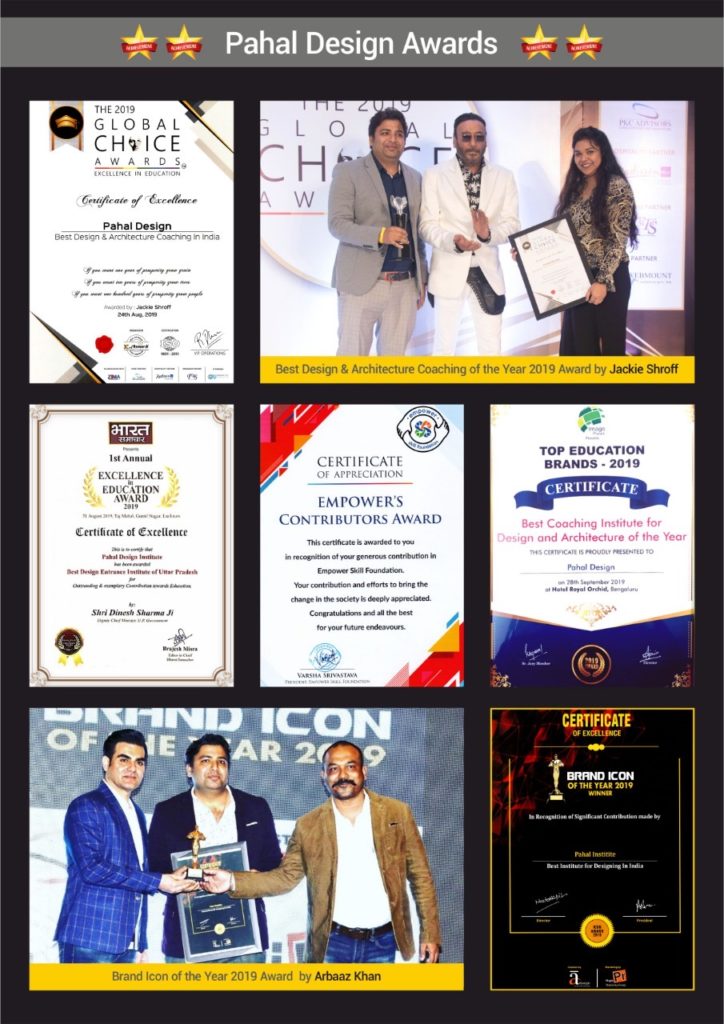
Pahal Design has been preparing students for entrance tests since 1999. Every year, Pahal Design mentors over 5,000 students and helps them secure a seat in to design Architecture and Fine arts institutes in India as well as across the world. Pahal Design highly experienced and expert faculty from reputed institutes such as NID, NIFT, IDC Mumbai, SPA well researched and updated study material, mock test, Doubt clearing sessions and online resources make Pahal Design the first choice of Design and Architecture aspirants. Finally, our coaching and guidance programs are so superior that they come with a guarantee!

Conveniently located Opposite Himalaya Mall, Pahal Design Ahmedabad prepares students for Design entrance exams such as NID, NIFT, UCEED and CEED, Architecture exam NATA JEE Arch and Fine Arts colleges like MSU, J J College, BHU, DCA and many more.

Pahal Design started it’s 31st Centre in Ahmedabad and 1st Centre in Gujrat. After 21 years of Academic excellence in Design Architecture and Fine Arts now Pahal Design will impart the quality education in Ahmedabad also by creating rank holder in NID, NIFT, NATA, JEE Arch, CEED and UCEED Exams.

Pahal Design Classroom Coaching Program Includes:

1. NID B.Des Entrance Exam Coaching
2. NID M.Des Entrance Exam Coaching
3. NIFT B.Des Entrance Exam Coaching
4. NIFT M.Des Entrance Exam Coaching
5. NIFT MFM Entrance Exam Coaching
6. NIFT B.Ftech Entrance Exam Coaching
7. NATA Entrance Exam Coaching
8. Jee Arch Entrance Exam Coaching
9. UCEED Entrance Exam Coaching
10.CEED Entrance Exam Coaching
11. CEPT Entrance Exam Coaching
12. MSU Entrance Exam Coaching
13. J J College Entrance Exam Coaching

ABOUT AHMEDABAD

Ahmedabad has emerged as an important economic and industrial hub in India. It is the second-largest producer of cotton in India, and its stock exchange is the country’s second oldest. Cricket is a popular sport in Ahmedabad, which houses the 54,000-seat Sardar Patel Stadium. The effects of liberalisation of the Indian economy have energised the city’s economy towards tertiary sector activities such as commerce, communication and construction.
Ahmedabad is considered as an important hub for higher education in India and its history is stretching back to Pre-Independence era. Ahmedabad had a literacy rate of 79.89% in 2001 which rose to 89.62 percent in 2011. As of 2011, literacy rate among male and female were 93.96 and 84.81 percent respectively. In 2012, The Times of India chose Ahmedabad as India’s best city to live in. Ahmedabad has been selected as one of the hundred Indian cities to be developed as a smart city under Government of India’s flagship Smart Cities Mission. In 2010 Ahmedabad was ranked third in Forbes’s list of fastest growing cities of the decade.

The Gujarati community is largely known for its hospitality and for being shrewd businessmen. Ahmedabad is a big industrial city long reputed for its textile industry, and today more so for its chemical, petroleum, international trade & IT industries. The city has been put on world map by its Islamic architecture like shaking towers or Zulte Minar , Sidi saiyed jali, Sarkhej roza, Kankaria lake originally known as a Hauze kutub aazam mauzam’s tomb , Jama masjid, tombs of sultan Ahmed shah and his queen, and also a lots of beautiful heritage mosques, also famous for world famous ISRO, PRL and institutions like Indian Institute of Management – Ahmedabad, Indian Institute of Technology Gandhinagar, National Institute of Design, Pandit Deendayal Petroleum University (PDPU), Dhirubhai Ambani Institute of Information & Communication Technology, IHM, MICA, EDI, Nirma University, Gujarat Law society, Swaminarayan Gurukul, CEPT (Centre for Environmental Planning and Technology) University, NIFT and a few others. The place has become a landmark for good education practices.
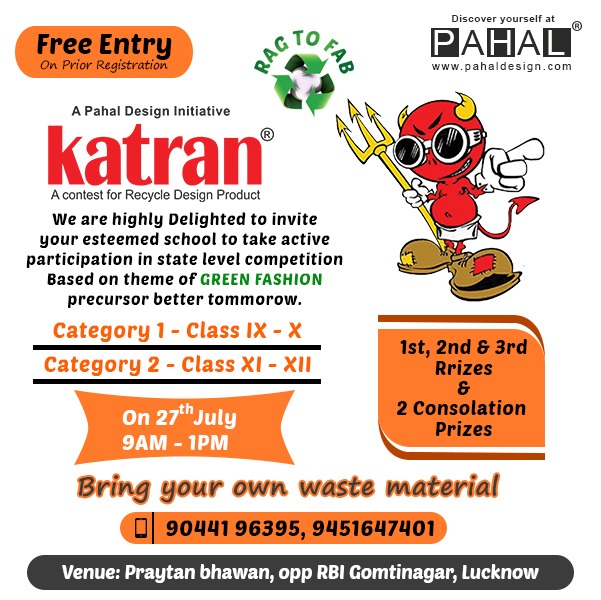
The purpose of which is to educate the children and the society as to how a material termed as waste can be brought to productive use. This event is conducted across the cities Delhi, Pune, Bangalore, Patna, Ranchi, Lucknow, Varanasi, Kanpur, Dehradun, Ghaziabad, Bhopal and Ludhiana.

“Katran” is an opportunity to promote and create awareness and to introduce green fashion in not only our state but in the whole country

It gives me immense pleasure to invite your prestigious school for KATRAN 2019

  1. CATEGORY – 1 = CLASS (IX – X) – 1st, 2ndand 3rdPrizes and 2 consolation Prizes
  2. CATEGORY – 2 = CLASS (XI – XII) – 1st, 2ndand 3rdPrizes and 2 consolation Prizes

*Consolation Prizes if number of students are more than 100 in a Category

*Participation Certificate will be given to every Participants.

As you understand it’s the stage where our young generation needs to taught and guided to judicially use our resources and KATRAN is a platform to learn and show.

  • How do I make useful household things from waste?
  • Creative ideas to get best out of waste.
  • Material Manipulation to create and get what you want
  • Encourage to use waste rather than throwing away, helps in waste management
  • Promote and create awareness and introduce green Fashion.

The Rule of the event is

  • Participation strictly on Registration on the format as provided
  • Not More than 5 students in a group

The Student can choose from the following sectors:

  1. Household items
  2. Product that can be used in School
  3. Wearable accessories
  4. souvenirs or Gift items
  5. Industrial use or Social Usage.
  • The contest will be strictly on spot, any deviation will lead to disqualification.
  • The marks will be out of 100
  • The final designed product will be evaluated by a panel of independent judges from design field.
  • The markings will be allotted as per the below criteria
  1. Usage of Materials b) Usability of the product c) Innovation and creativity
  • The students should be accompanied by staff from school.

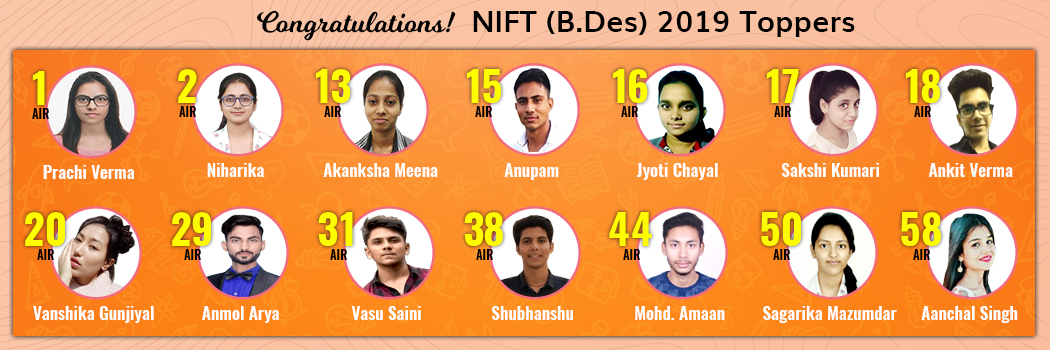
NIFT 10 Programs i.e. all courses Result declared on 20th May 2019. Again From Pahal Design 560 Students selected for NIFT with AIR-1, AIR-2 and 54 Students in NIFT Top 100 in different categories and courses. Prachi Verma secured SC Category Rank 1 in B. Des with 74.2 Marks and Niharika in same category secured AIR 2 in B.Des with 71.60 Marks. In MFM Simran Kaur Madan got AIR 2 with Marks 80.60 in General Category, Bhawana Prakash AIR 18, with Marks 77.57 in General Category, Srishti Sabaharwal AIR 21, with Marks 77.51

in General Category, Bhavya Diddee AIR 32, Marks 76.03 in General Category. In M.Des Palan Satsangi, AIR 2 with Marks 68.5 in OBC Category.Karan Tomar, AIR 29 in M.Ftech with Marks 60.78.

NIFT MFM GD PI TOPICS 2019

NIFT MFM GD-PI for year 2019 started from 3rd April and sharing some of the GD PI topics and questions which were asked.

Interview Questions:

1) I was asked to introduce myself and tell them about my background
They built questions from that itself 

2) They asked whether smartphones and the cameras in phones are diminishing the usage of DSLRs 

3) I was asked to compare twitter and Instagram as social mediums 

4) I was asked to explain why I’m interested in fashion. 

5) why I didn’t opt for fashion design was also asked 

6) I was also asked whether changing schools was a good thing or bad (my dad was in the army and I ended up changing 9 schools

GD Topics:

1. Sustainable fashion
2. Can artificial intelligence be creative?
3. We were asked about women entrepreneurs in India in the next 10 years.

A case study was shared and then we all were given a minute to share our thoughts before the group could do an open discussion.


Interview Questions:


1) why I don’t want to continue the stream I am doing my graduation in .


2) the brand of clothes I was wearing .


3) 5 retailers name and 5 shirt brands 


4) subjects of the course I am applying for 


5) where do I see myself in 5 years from now .
6) Family Background

For any further updates call 88-00-22-6864

WhatsApp Enquiry