
Set up in 1986, NIFT is the pioneering institute of fashion education in the country and has been in the vanguard of providing professional human resource to the textile and apparel industry. It was made a statutory institute in 2006 by an Act of the Indian Parliament with the President of India as ‘Visitor’ and has full-fledged campuses all across the country. Over the years NIFT has also been working as a knowledge service provider to the Union and State governments in the area of design development and positioning of handlooms and handicrafts.

Curriculum

Programme Structure

NIFT has adopted a format of Majors, Deepening Specialisations, Minors and General Electives. Inter disciplinary Minors provide individuated pathways that would permit students to acquire interdisciplinary skillsets and opt for a set of subjects that complement studies in one’s major or explore an unrelated area of intellectual interest. General Electives have been offered to the students to help them enhance their personality and develop interests in specific areas like Personality Development, Communication Skills, Critical Thinking Skills, Professional Ethics etc. The Craft Cluster Initiative has been integrated into the curriculum. Increased Industry interaction for students through classroom projects, internships and part transaction in Industry Environment is the focus of the restructured curriculum.

The contact hours have been recalibrated to 25 hours per week, giving increased time for studio practice and self–study to the students. Standardisation of credits across all programmes and all semesters has been undertaken.
New and emerging areas across disciplines integrated into the curriculum:

    1. a) Artificial Intelligence
    1. d) Advanced Apparel Manufacturing Management
      b) Internet of Things

      c) Designing Ergonomic Environment
    1. e) Big Data and Business Analytics
    1. f) Fashion Thinking
    1. g) User Experience, Sensory Design
    1. h) Augmented Reality, Virtual Experience design
    1. i) Head Gear Design
    1. j) CAD 3D & Contemporary Manufacturing
    1. k) Couture Jewellery
    1. l) Travel & Outdoor Gear Design
    1. m) Design for Society
    1. n) Smart Jewellery
    1. o) Smart Textiles
    1. p) Active Sportswear, Bespoke Menswear, Wearable Technology
    1. q) Shapewear & Seamless Garments on Computerized Knitting
    1. r) Optitex for Virtual Prototyping
    1. s) Surface Embellishment: Digital Embroidery, Laser, 3D Printing
    1. t) Design Strategy

NIFT PARTNERSHIP AND ASSOCIATION

NIFT – Fashion Institute of Technology (FIT), New York, USA strategic partnership provides a unique opportunity to select meritorious NIFT students to obtain Dual Degree from both NIFT and FIT. Students from NIFT undertake two years study at the home Institute intercepted by one year of study at FIT. Thereafter, the students resume their studies at NIFT to obtain the Dual Degree from both the institutes.
Some of the key institutes with whom NIFT has an association are Queensland University of Technology, Australia; De Montfort University, UK; Glasgow School of Arts, UK; Swiss Textile College, Switzerland; ENSAIT, France; NABA, Italy; ESMOD, Germany; Saxion University of Applied Sciences, Netherlands; Amsterdam Fashion Institute, Netherlands; Bunka Gauken University, Japan; University of Northampton, UK; Politechnico di Milano, Italy; KEA – Copenhagen School of Design and Technology, Denmark; North Carolina State University, USA; The Savannah College of Art and Design (SCAD), USA and many more. NIFT is also a member of the prestigious International Foundation for Fashion Technology Institutes (IFFTI) and Cumulus, an international body representing design institutes of the world.

AHMEDABAD (Drive-in-Road)
Address:- 9, 1st Floor, Sunrise Centre-II, Sunrise Park, Bodakdev,
Ahmedabad, Gujarat-380015
Landmark: Off Drive-in-Road
Contact No: 78029-49620, 079-40398630
Contact Person: Ms Manisha Malkani
Email: ahmedabad@pahaldesign.com
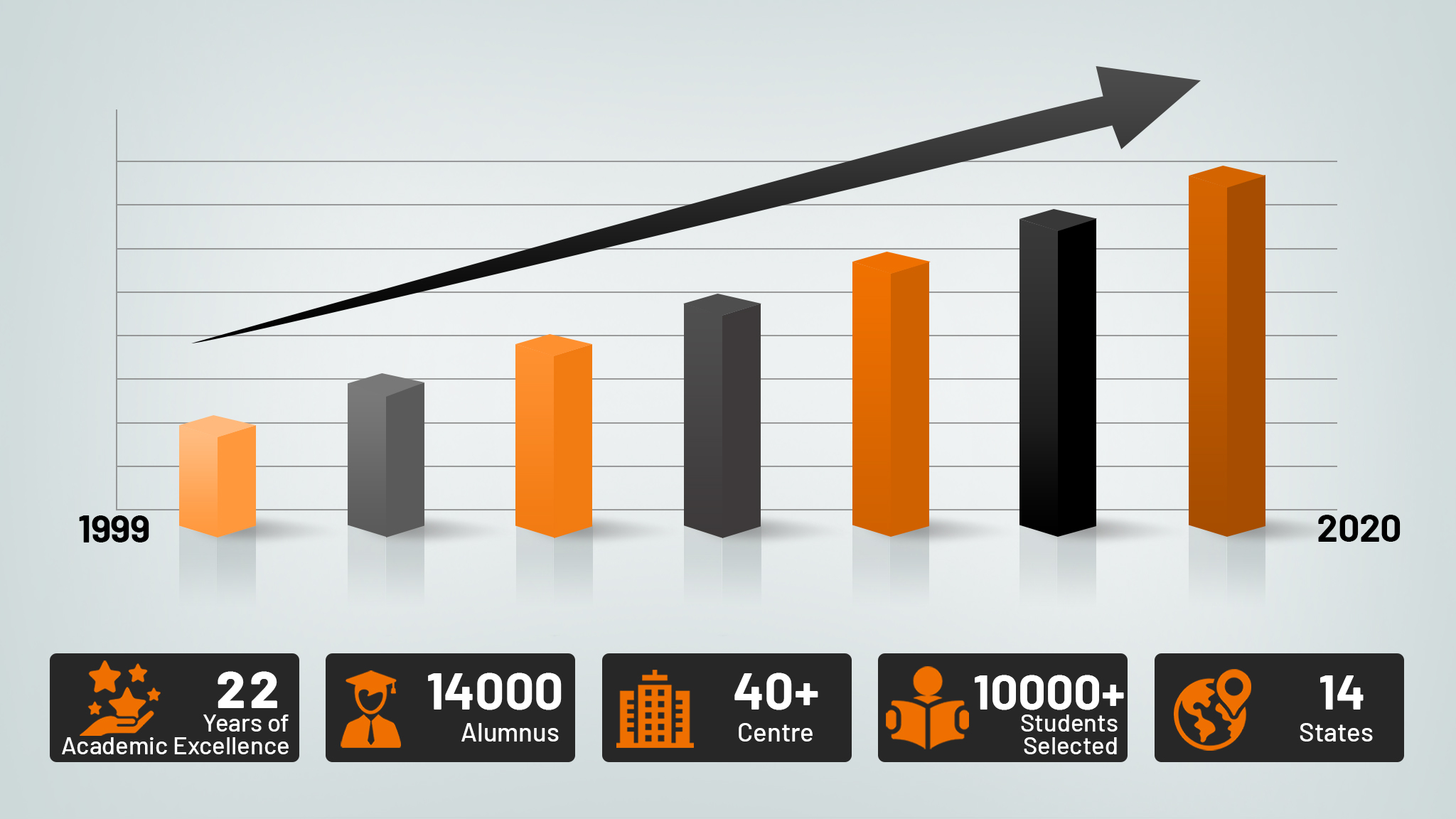
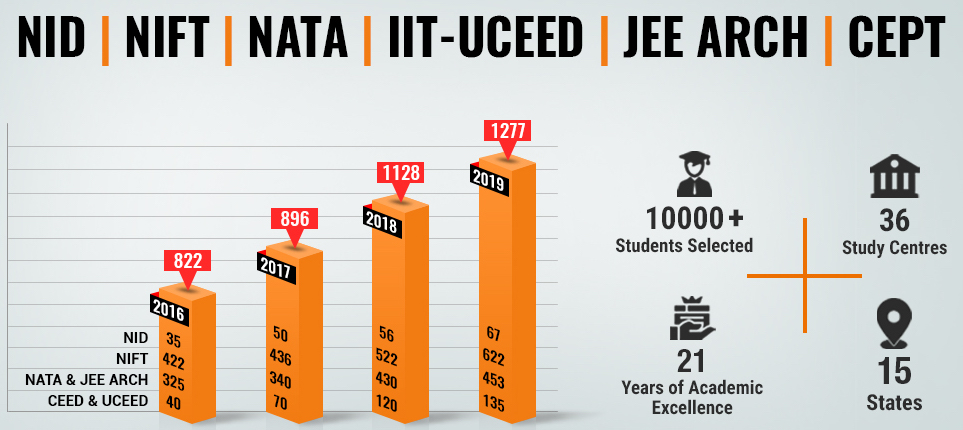
There are many Design Coaching in Jaipur but if we need to find out the best coaching classes, with best learning experience then Pahal Design comes with 22 Years of academic excellence and more than 40 centres across India including all the metros. (New Delhi, Mumbai, Bengaluru, Kolkata, Pune, Ahmedabad, Gurgaon, Jaipur, Lucknow, Dehradun, Chandigarh, Bhopal, Indore, Patna, Ranchi, Kanpur and many more other cities). Now Pahal Design is in Jaipur at Vaishali Nagar for Design, Architecture and Fine Arts Coaching. If any students are looking for Design, Fashion, Architecture and Fine Arts Coaching or any guidance related to Design Colleges then we have Free Guidance for all Design Students.
The design industry in India is growing at a staggering rate of 23 to 25 per cent annually – it’s an indicative of the qualitative change you find in the look and feel of consumer goods. Industry insiders believe that greater spending power and changing needs of consumers are responsible for the boom in the design industry. “People today are spending more money. From the interiors of their flats to the products they buy, all consumers are looking for that extra value-add. There is this new emphasis on vanity. The culture is shifting and design is a reflection of that shift.” With brand positioning and identity the new buzzwords, industries that form the designer’s client base are a lot more aware about design and its importance.

There are some sectors within the industry that have seen a higher growth of interest than others – animation, graphics, apparel, textiles, automotive, product and software interface design to name a few. This interest has also translated into a greater demand for industrial and communication designers.

Currently, India needs 8,000-10,000 designers a year, while overall availability of qualified designers is only 3,000. To make matters worse, only 500 of these 3,000 are said to be practicing designers. There is a reason why your new car is better looking than your last and why your refrigerator seems more functional than the one you had before. 

Design can transform the way we do things, and result in new economic benefits and a better quality of life. The strategic nature of design helps solve problems in ways that are functionally and aesthetically pleasing and make economic sense. Design helps to improve quality and differentiation, offer world class products and services, improve business efficiencies, productivity and margins, increase revenues and achieve higher market share and accelerated growth.

The design industry lags behind other professional services domains in numerical terms when looked at in terms of turnover and number of employees. Architecture, Interior, Animation / New Media, Fashion Design are leading domains within the design industry. Other segments are far behind at present. However with the change in the economic scenario, design domains such as graphic design, industrial design, human computer interaction are growing at a fast clip. The number of design companies is growing as also there is growth in existing companies. There is a good trend of designers opting to start their own setup. Hence most companies existing today are new. The existing companies are consolidating further by adding more services to their portfolio within diverse design disciplines.

India is a large market and at the same unique as well. There is no such thing called as a thumb rule which can describe Indian market or consumers. They vary in cultures, traditions, religions, customers, food, dressing, etc. At the same time the Indian consumer is becoming more demanding and is asserting himself / herself to get his / her aspirations satisfied.

Multinational corporations are focusing on India as a new market for trading their products / services. They understand that successes elsewhere may not necessarily translate in a similar way in India. They will need to understand the market, the sensibilities of the people and respond to them through their offerings. Global corporations will need to work with Indian designers to understand the local market.
To better understand the Indian consumer, to meet the needs and aspirations of this assertive, active, enlightened consumer, Indian businesses and multinational corporations will need to take assistance from Indian designers. This puts a spot light on the design industry as never before.

 
Jaipur

Address:- 2nd Floor, F 18, Gautam Marg, Vaishali Nagar, Jaipur, Rajasthan -302021
Contact Person: Mr. Aman and Mr. Akbar
Contact No: 97721-99911, 0141-6656509
Email: jaipur@pahaldesign.com

Set up in 1986, NIFT is the pioneering institute of fashion education in the country and has been in the vanguard of providing professional human resource to the textile and apparel industry. It was made a statutory institute in 2006 by an Act of the Indian Parliament with the President of India as ‘Visitor’ and has full fledged campuses all across the country. Over the years NIFT has also been working as a knowledge service provider to the Union and State governments in the area of design development and positioning of handlooms and handicrafts.

NIFT is committed to academic excellence in fashion education. The vision of the institute embraces challenges and provides the impetus in setting highest academic standards. NIFT continues to strive to be nothing but the best.

NIFT Exam Pattern 2020: Creative Ability Test (CAT)

NIFT CAT exam pattern is such that candidates are evaluated on the basis of their intuition skill, power of observation, innovation in the development of a concept as well as design ability of the candidate. One of the most important aspects of NIFT CAT exam is that it tests the creative as well as innovative use of colour and illustration skills of aspirants.

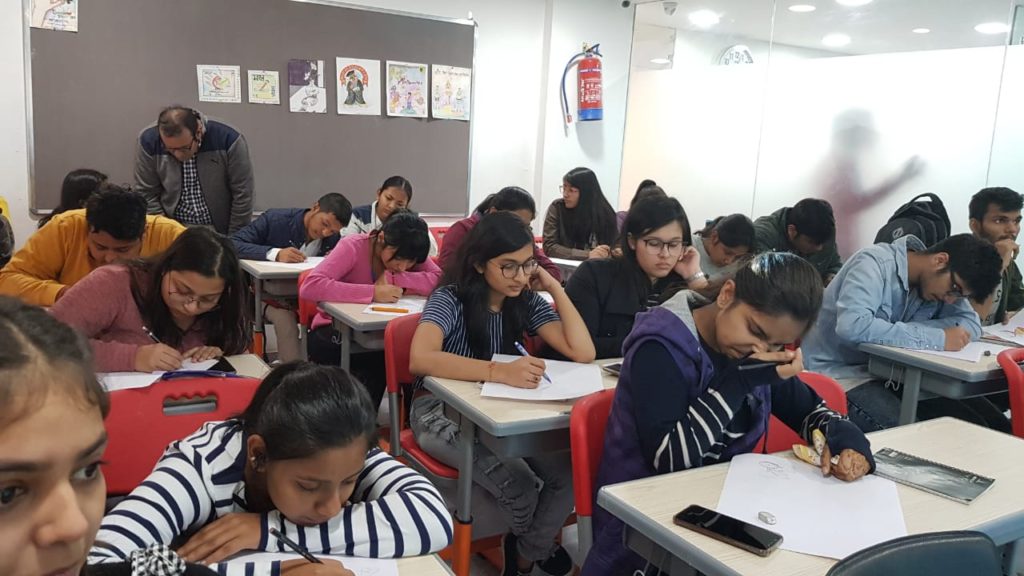
NIFT CAT is a paper-pencil based exam and it is of three hours duration.

NIFT Exam Pattern 2020: General Ability Test (GAT)

Candidates seeking NIFT admissions in BDes programmes offered at NIFT need to appear for GAT exam. This test comprises of the below-mentioned sections:

  • Quantitative Ability
  • Communication Ability
  • English Comprehension
  • Analytical Ability
  • General Knowledge and Current Affairs

NIFT CAT Exam Pattern for BDes Admissions

In NIFT exam pattern 2020 for BDes admissions, candidates need to appear for CAT. NIFT CAT exam paper has three questions which candidates need to attempt in three hours duration. In this design entrance exam, candidates are evaluated on the below mentioned parameters:

  • Design ability
  • Intuitive ability
  • Observation skills
  • Concept development skills
  • Creative use of colour
  • Illustration skills

NIFT Exam Pattern for Situation Test

Candidates who have been shortlisted for NIFT BDes admissions on the basis of their written test need to appear for NIFT Situation Test 2020 wherein their “material handling and innovative ability” will be tested.

Here, candidates will be evaluated on “on Space Visualization, Innovative and creative use of given material, composition of elements, colour scheme, construction skill , finesse of the model and overall presentation etc. These parameters will be checked with the write up explaining the concept / idea behind the model constructed. The weightage of the write up is 30%. Since the medium of teaching in NIFT is English, the write-up will be in English language.

NIFT Exam Pattern for Artisans Category

Candidates are informed that NIFT offers admission to Artisans/ Children of Artisans based on their performance in Studio Test, Interview round and verification of documents/ eligibility criteria.

NIFT Exam Pattern for Lateral Entry Admission 2020

NIFT lateral entry admission (NLEA) is the process through which candidates can secure admission directly in the third semester of UG courses offered at National Institute of Fashion Technology.

Q. What is NIFT exam pattern?

A. NIFT entrance exam is a three tiered process. Candidates can go through the list of tests they would need to appear for in order to secure admission in different courses offered at NIFT.

Q. What is the marking scheme for NIFT entrance exam?

A. NIFT exam marking scheme varies for CAT and GAT. In NIFT CAT exam, candidates are evaluated out of 100 marks. In GAT exam, aspirants are awarded for one mark for every correct answer and 0.25 marks are deducted for each wrong answer selected by them.

Q. How can I prepare for NIFT CAT?

A. Candidates need to go through the detailed exam pattern as well as syllabus for NIFT CAT and thereafter formulate a preparation strategy. In NIFT CAT exam, aspirants are evaluated on the basis of their power of observation, innovation and design ability.

Q. How can I prepare for NIFT GAT?

A. NIFT GAT comprises of multiple choice questions that aspirants need to solve in order to crack the exam. Questions in NIFT GAT are from subjects such as Quantitative Ability, Communication Ability, English Comprehension, Analytical Ability, General Knowledge and Current Affairs.

Q. Is there any negative marking in NIFT entrance exam?

A. There is no negative marking in NIFT CAT exam. However, for GAT exam, 0.25 marks will be deducted for each wrong answer selected by a candidate.

Q. How many questions are asked in NIFT CAT?

A. In NIFT CAT, candidates have to attempt three drawing questions.

Q. How many questions are asked in NIFT GAT?

A. The exam pattern for NIFT GAT varies from one course to the other. The total number of questions asked in NIFT GAT are mentioned below:

  • BDes: 100 questions
  • BFTech: 150 questions
  • MDes: 120 questions
  • MFTech: 150 questions
  • MFM: 150 questions

Q. What is the duration of NIFT CAT exam?

A. NIFT CAT for BDes and MDes course admissions is of three hours duration.

Q. What is the duration of NIFT GAT exam?

A. The duration of NIFT GAT for design course admissions is as mentioned below:

  • BDes: 2 hours
  • BFTech: 3 hours
  • MDes: 2 hours
  • MFTech: 3 hours
  • MFM: 3 hours

Q. What is NIFT exam pattern for BDes admissions?

A. Candidates can secure admission in BDes course offered at NIFT campuses by clearing NIFT Creative Ability Test (CAT) and General Ability Test (GAT). Aspirants who clear these written entrance exams then need to appear for Situation Test round.

Q. What is NIFT exam pattern for MDes admissions?

A. Candidates can secure admission in MDes course offered at NIFT campuses by clearing NIFT Creative Ability Test (CAT) and General Ability Test (GAT). Aspirants who clear these written entrance exams then need to appear for GD/PI admission round.


Set up in 1986, NIFT is the pioneering institute of fashion education in the country and has been in the vanguard of providing professional human resource to the textile and apparel industry. It was made a statutory institute in 2006 by an Act of the Indian Parliament with the President of India as ‘Visitor’ and has full fledged campuses all across the country. Over the years NIFT has also been working as a knowledge service provider to the Union and State governments in the area of design development and positioning of handlooms and handicrafts.

NIFT is committed to academic excellence in fashion education. The vision of the institute embraces challenges and provides the impetus in setting highest academic standards. NIFT continues to strive to be nothing but the best.

NIFT Exam Pattern 2020: Creative Ability Test (CAT)

NIFT CAT exam pattern is such that candidates are evaluated on the basis of their intuition skill, power of observation, innovation in the development of a concept as well as design ability of the candidate. One of the most important aspects of NIFT CAT exam is that it tests the creative as well as innovative use of colour and illustration skills of aspirants.

NIFT CAT is a paper-pencil based exam and it is of three hours duration.

NIFT Exam Pattern 2020: General Ability Test (GAT)

Candidates seeking NIFT admissions in BDes programmes offered at NIFT need to appear for GAT exam. This test comprises of the below-mentioned sections:

  • Quantitative Ability
  • Communication Ability
  • English Comprehension
  • Analytical Ability
  • General Knowledge and Current Affairs

NIFT CAT Exam Pattern for BDes Admissions

In NIFT exam pattern 2020 for BDes admissions, candidates need to appear for CAT. NIFT CAT exam paper has three questions which candidates need to attempt in three hours duration. In this design entrance exam, candidates are evaluated on the below mentioned parameters:

  • Design ability
  • Intuitive ability
  • Observation skills
  • Concept development skills
  • Creative use of colour
  • Illustration skills

NIFT Exam Pattern for Situation Test

Candidates who have been shortlisted for NIFT BDes admissions on the basis of their written test need to appear for NIFT Situation Test 2020 wherein their “material handling and innovative ability” will be tested.

Here, candidates will be evaluated on “on Space Visualization, Innovative and creative use of given material, composition of elements, colour scheme, construction skill , finesse of the model and overall presentation etc. These parameters will be checked with the write up explaining the concept / idea behind the model constructed. The weightage of the write up is 30%. Since the medium of teaching in NIFT is English, the write-up will be in English language.

NIFT Exam Pattern for Artisans Category

Candidates are informed that NIFT offers admission to Artisans/ Children of Artisans based on their performance in Studio Test, Interview round and verification of documents/ eligibility criteria.

NIFT Exam Pattern for Lateral Entry Admission 2020

NIFT lateral entry admission (NLEA) is the process through which candidates can secure admission directly in the third semester of UG courses offered at National Institute of Fashion Technology.

Q. What is NIFT exam pattern?

A. NIFT entrance exam is a three tiered process. Candidates can go through the list of tests they would need to appear for in order to secure admission in different courses offered at NIFT.

Q. What is the marking scheme for NIFT entrance exam?

A. NIFT exam marking scheme varies for CAT and GAT. In NIFT CAT exam, candidates are evaluated out of 100 marks. In GAT exam, aspirants are awarded for one mark for every correct answer and 0.25 marks are deducted for each wrong answer selected by them.

Q. How can I prepare for NIFT CAT?

A. Candidates need to go through the detailed exam pattern as well as syllabus for NIFT CAT and thereafter formulate a preparation strategy. In NIFT CAT exam, aspirants are evaluated on the basis of their power of observation, innovation and design ability.

Q. How can I prepare for NIFT GAT?

A. NIFT GAT comprises of multiple choice questions that aspirants need to solve in order to crack the exam. Questions in NIFT GAT are from subjects such as Quantitative Ability, Communication Ability, English Comprehension, Analytical Ability, General Knowledge and Current Affairs.

Q. Is there any negative marking in NIFT entrance exam?

A. There is no negative marking in NIFT CAT exam. However, for GAT exam, 0.25 marks will be deducted for each wrong answer selected by a candidate.

Q. How many questions are asked in NIFT CAT?

A. In NIFT CAT, candidates have to attempt three drawing questions.

Q. How many questions are asked in NIFT GAT?

A. The exam pattern for NIFT GAT varies from one course to the other. The total number of questions asked in NIFT GAT are mentioned below:

  • BDes: 100 questions
  • BFTech: 150 questions
  • MDes: 120 questions
  • MFTech: 150 questions
  • MFM: 150 questions

Q. What is the duration of NIFT CAT exam?

A. NIFT CAT for BDes and MDes course admissions is of three hours duration.

Q. What is the duration of NIFT GAT exam?

A. The duration of NIFT GAT for design course admissions is as mentioned below:

  • BDes: 2 hours
  • BFTech: 3 hours
  • MDes: 2 hours
  • MFTech: 3 hours
  • MFM: 3 hours

Q. What is NIFT exam pattern for BDes admissions?

A. Candidates can secure admission in BDes course offered at NIFT campuses by clearing NIFT Creative Ability Test (CAT) and General Ability Test (GAT). Aspirants who clear these written entrance exams then need to appear for Situation Test round.

Q. What is NIFT exam pattern for MDes admissions?

A. Candidates can secure admission in MDes course offered at NIFT campuses by clearing NIFT Creative Ability Test (CAT) and General Ability Test (GAT). Aspirants who clear these written entrance exams then need to appear for GD/PI admission round.


WhatsApp Enquiry