The best coaching institute for NIFT Entrance exam in South Delhi is undoubtedly Pahal Design. They have two centres in South Delhi one is in Hauz Khas and Other is in South Ex. These 2 centres are location at prime location of Delhi which is well connected to metro and Hostel facilities are also available for outstation students. Hauz Khas centre is just 500m for NIFT first and best campus at Hauz Khas. Many renowned markets of Delhi such as Sarojini Nagar Market, Green Park Market, Lajpat Nagar Market, South Extension, Kotla Mubarakpur, M-block Market, etc. and malls such as Ansal Plaza, DLF, MGF Metropolitan, Select Citywalk, Malviya Nagar, etc. are located in South Delhi. The IIT, AIIMS, NIFT, three of the country’s premier institutes in the field of technology, medicine and fashion respectively lie in the Hauz Khas locality of South Delhi. The Indian Institute of Foreign Trade of Delhi is located in the Qutub Institutional Area of South Delhi. Sangam Vihar is also located in South Delhi, which has the highest population in the State. The top Central University Jamia Millia Islamia is situated at Jamia Nagar area of South Delhi. The administrative district had 20% Green Cover, as of 2009. It has several spacious green parks, wildlife sanctuary, biodiversity parks, and green belts. Deer Park and Rose Garden in Hauz Khas, Asola Wildlife Sanctuary close to Delhi’s southern border on the Aravallis foothills are few examples. It has a good mix of concrete and greens. Jahaz Mahal, Zafar Mahal, Tughlaqabad, Hauz Khas Complex, Bijay Mandal, Qutub Minar, Mehrauli Archaeological Park, and the Safdarjung Tomb comprise some of South Delhi’s most scenic heritage sites.

Most of the affluent and upmarket residential areas of South Delhi were established in the early 1960’s. Today, Colonies such as

PAHAL DESIGN

Greater Kailash, Defense Colony, South Extension, Green Park, Neeti Bagh, Gulmohar Park, Hauz Khas, Safdarjung Development Area, Vasant Vihar,Sarvodaya Enclave, Anand Niketan, Jasola and Panchsheel Park are among the most expensive pin codes of New Delhi. All these colonies are categorized in either category ‘A’ or category ‘B’ which highlights the fact that residents of these colonies come under the very affluent and upper-middle-class sections of the society. Newly built builder floors and independent villas sell for as high as INR 10-80 crores in South Delhi. All these colonies are ‘planned colonies’ and therefore have proper connectivity to major roads and metro networks. They all also host their own markets such as Greater Kailash-1, M block Market, Green Park Market, Hauz Khas village area, South Extension Market and Defense Colony Market which are considered to be the poshest markets of Delhi. There are also numerous dedicated recreational areas around these colonies which is a luxury in today’s heavily urbanized and congested New Delhi.

SOUTH DELHI CENTRES:

Hauz Khas (Corporate Branch)

Address:- G-8, G Block Market, 2nd Floor, Hauz Khas, New Delhi-110016
Nearest Metro Station Hauz Khas Gate No-3, Mayfair Garden / RBI Colony
Landmark – Near Punjab National Bank
Contact No: 88-00-22-6864, 011-40106405
Contact Person: Ms Yashika
Email: corporate@pahaldesign.com

South Extension Part – 1

Address:- E-17, Ground Floor, South Extension Part 1, New Delhi – 110049
Landmark: Mcdonald’s Lane, Nearest Metro – South Ex Metro Gate No 2
Contact No : 98994-29749, 011-41350505
Contact Person : Ms. Neha Siddiqui
Email : info@pahaldesign.com


ngg_shortcode_0_placeholder

The National Institute of Fashion Technology is a leader in fashion education with the ability to integrate knowledge, traditional arts, contemporary thought, academic freedom, innovations in design & technology and creative thinking to continuously upgrade its curriculum to address the changing needs of the industry. Its history of more than three decades at the pinnacle of fashion education stands as a testimony to its focus on core values where academic excellence has been nurtured. The institute has stood as a beacon of industry-academia engagement and a key enabler in developing competent professionals.

The National Institute of Fashion Technology (NIFT), set up in 1986 under the Ministry of Textiles, Government of India, is a Statutory Institute governed by the NIFT Act 2006. Bringing in a wide range of aesthetic & intellectual orientations, the early instructors included leading progressive scholars from Fashion Institute of Technology, New York, USA.

Academic inclusiveness has been the key thought in the expansion plans of the institute. NIFT, today, has spread its wings across the length and breadth of the country. Through its 16 professionally managed campuses, National Institute of Fashion Technology provides an excellent environment to its students from different parts of the country to achieve their highest potential through the programmes offered. Since the early years of its inception, the institute has provided a firm foundation in fashion education in the domains of Design, Management and Technology. Since then, NIFT has continued to set and achieve higher academic standards.

NIFT Courses:

  1. B.Des (Bachelor of Design)
  2. M.Des (Master of Design)
  3. B.Ftech (Bachelor of Fashion Technology)
  4. M.Ftech (Master of Fashion Technology)
  5. MFM (Master of Fashion Management)

NIFT Exam Pattern 2020: Creative Ability Test (CAT)

NIFT CAT exam pattern is such that candidates are evaluated on the basis of their intuition skill, power of observation, innovation in the development of a concept as well as design ability of the candidate. One of the most important aspects of NIFT CAT exam is that it tests the creative as well as innovative use of colour and illustration skills of aspirants.

NIFT CAT is a paper-pencil based exam and it is of three hours duration.

NIFT Exam Pattern 2020: General Ability Test (GAT)

Candidates seeking NIFT admissions in BDes programmes offered at NIFT need to appear for GAT exam. This test comprises of the below-mentioned sections:

    • Quantitative Ability
    • Communication Ability
  • English Comprehension
  • Analytical Ability
  • General Knowledge and Current Affairs

The duration of NIFT GAT is 120 minutes for BDes course. While formulating the merit list for BDes course admissions 30% weighatge is allotted to GAT section of NIFT entrance exam.

NIFT CAT Exam Pattern for BDes Admissions

In NIFT exam pattern 2020 for BDes admissions, candidates need to appear for CAT. NIFT CAT exam paper has three questions which candidates need to attempt in three hours duration. In this design entrance exam, candidates are evaluated on the below mentioned parameters:

  • Design ability
  • Intuitive ability
  • Observation skills
  • Concept development skills
  • Creative use of colour
  • Illustration skills

NIFT Exam Pattern for Situation Test

Candidates who have been shortlisted for NIFT BDes admissions on the basis of their written test need to appear for NIFT Situation Test 2020 wherein their “material handling and innovative ability” will be tested.

Here, candidates will be evaluated on “on Space Visualization, Innovative and creative use of given material, composition of elements, colour scheme, construction skill , finesse of the model and overall presentation etc. These parameters will be checked with the write up explaining the concept / idea behind the model constructed. The weightage of the write up is 30%. Since the medium of teaching in NIFT is English, the write-up will be in English language.

  1. What is the marking scheme for NIFT entrance exam? NIFT exam marking scheme varies for CAT and GAT. In NIFT CAT exam, candidates are evaluated out of 100 marks. In GAT exam, aspirants are awarded for one mark for every correct answer and 0.25 marks are deducted for each wrong answer selected by them.
  2. How can I prepare for NIFT CAT? Candidates need to go through the detailed exam pattern as well as syllabus for NIFT CAT and thereafter formulate a preparation strategy. In NIFT CAT exam, aspirants are evaluated on the basis of their power of observation, innovation and design ability. Candidates can go through NIFT Entrance Exam Preparation to have a plan in place when preparing for this design entrance exam.
  3. How can I prepare for NIFT GAT? NIFT GAT comprises of multiple choice questions that aspirants need to solve in order to crack the exam. Questions in NIFT GAT are from subjects such as Quantitative Ability, Communication Ability, English Comprehension, Analytical Ability, General Knowledge and Current Affairs.
  4. Is there any negative marking in NIFT entrance exam? There is no negative marking in NIFT CAT exam. However, for GAT exam, 0.25 marks will be deducted for each wrong answer selected by a candidate. 
  5. What is the syllabus for NIFT exam? National Institute of Fashion Technology does not release any syllabus for NIFT exam. However, candidates can develop an idea of NIFT Entrance Exam Pattern.
  6. How many questions are asked in NIFT CAT? In NIFT CAT, candidates have to attempt three drawing questions.
  7. How many questions are asked in NIFT GAT? The exam pattern for NIFT GAT varies from one course to the other. The total number of questions asked in NIFT GAT are mentioned below:
  • BDes: 100 questions
  • BFTech: 150 questions
  • MDes: 120 questions
  • MFTech: 150 questions
  • MFM: 150 questions

Pahal Design Chandigarh

Address:- SCO No. 54/55, 2nd Floor, Sector 34 A, Chandigarh – 160022
Contact No : 91004-04681
Contact Person : Mr Raja Pratap
Email : chandigarh@pahaldesign.com

ngg_shortcode_2_placeholder 


The National Institute of Fashion Technology is a leader in fashion education with the ability to integrate knowledge, traditional arts, contemporary thought, academic freedom, innovations in design & technology and creative thinking to continuously upgrade its curriculum to address the changing needs of the industry. Its history of more than three decades at the pinnacle of fashion education stands as a testimony to its focus on core values where academic excellence has been nurtured. The institute has stood as a beacon of industry-academia engagement and a key enabler in developing competent professionals.

The National Institute of Fashion Technology (NIFT), set up in 1986 under the Ministry of Textiles, Government of India, is a Statutory Institute governed by the NIFT Act 2006. Bringing in a wide range of aesthetic & intellectual orientations, the early instructors included leading progressive scholars from Fashion Institute of Technology, New York, USA.

Academic inclusiveness has been the key thought in the expansion plans of the institute. NIFT, today, has spread its wings across the length and breadth of the country. Through its 16 professionally managed campuses, National Institute of Fashion Technology provides an excellent environment to its students from different parts of the country to achieve their highest potential through the programmes offered. Since the early years of its inception, the institute has provided a firm foundation in fashion education in the domains of Design, Management and Technology. Since then, NIFT has continued to set and achieve higher academic standards.

NIFT Courses:

  1. B.Des (Bachelor of Design)
  2. M.Des (Master of Design)
  3. B.Ftech (Bachelor of Fashion Technology)
  4. M.Ftech (Master of Fashion Technology)
  5. MFM (Master of Fashion Management)

NIFT Exam Pattern 2020: Creative Ability Test (CAT)

NIFT CAT exam pattern is such that candidates are evaluated on the basis of their intuition skill, power of observation, innovation in the development of a concept as well as design ability of the candidate. One of the most important aspects of NIFT CAT exam is that it tests the creative as well as innovative use of colour and illustration skills of aspirants.

NIFT CAT is a paper-pencil based exam and it is of three hours duration.

NIFT Exam Pattern 2020: General Ability Test (GAT)

Candidates seeking NIFT admissions in BDes programmes offered at NIFT need to appear for GAT exam. This test comprises of the below-mentioned sections:

    • Quantitative Ability
    • Communication Ability
  • English Comprehension
  • Analytical Ability
  • General Knowledge and Current Affairs

The duration of NIFT GAT is 120 minutes for BDes course. While formulating the merit list for BDes course admissions 30% weighatge is allotted to GAT section of NIFT entrance exam.

NIFT CAT Exam Pattern for BDes Admissions

In NIFT exam pattern 2020 for BDes admissions, candidates need to appear for CAT. NIFT CAT exam paper has three questions which candidates need to attempt in three hours duration. In this design entrance exam, candidates are evaluated on the below mentioned parameters:

  • Design ability
  • Intuitive ability
  • Observation skills
  • Concept development skills
  • Creative use of colour
  • Illustration skills

NIFT Exam Pattern for Situation Test

Candidates who have been shortlisted for NIFT BDes admissions on the basis of their written test need to appear for NIFT Situation Test 2020 wherein their “material handling and innovative ability” will be tested.

Here, candidates will be evaluated on “on Space Visualization, Innovative and creative use of given material, composition of elements, colour scheme, construction skill , finesse of the model and overall presentation etc. These parameters will be checked with the write up explaining the concept / idea behind the model constructed. The weightage of the write up is 30%. Since the medium of teaching in NIFT is English, the write-up will be in English language.

  1. What is the marking scheme for NIFT entrance exam? NIFT exam marking scheme varies for CAT and GAT. In NIFT CAT exam, candidates are evaluated out of 100 marks. In GAT exam, aspirants are awarded for one mark for every correct answer and 0.25 marks are deducted for each wrong answer selected by them.
  2. How can I prepare for NIFT CAT? Candidates need to go through the detailed exam pattern as well as syllabus for NIFT CAT and thereafter formulate a preparation strategy. In NIFT CAT exam, aspirants are evaluated on the basis of their power of observation, innovation and design ability. Candidates can go through NIFT Entrance Exam Preparation to have a plan in place when preparing for this design entrance exam.
  3. How can I prepare for NIFT GAT? NIFT GAT comprises of multiple choice questions that aspirants need to solve in order to crack the exam. Questions in NIFT GAT are from subjects such as Quantitative Ability, Communication Ability, English Comprehension, Analytical Ability, General Knowledge and Current Affairs.
  4. Is there any negative marking in NIFT entrance exam? There is no negative marking in NIFT CAT exam. However, for GAT exam, 0.25 marks will be deducted for each wrong answer selected by a candidate. 
  5. What is the syllabus for NIFT exam? National Institute of Fashion Technology does not release any syllabus for NIFT exam. However, candidates can develop an idea of NIFT Entrance Exam Pattern.
  6. How many questions are asked in NIFT CAT? In NIFT CAT, candidates have to attempt three drawing questions.
  7. How many questions are asked in NIFT GAT? The exam pattern for NIFT GAT varies from one course to the other. The total number of questions asked in NIFT GAT are mentioned below:
  • BDes: 100 questions
  • BFTech: 150 questions
  • MDes: 120 questions
  • MFTech: 150 questions
  • MFM: 150 questions

Pahal Design Ranchi

Address:- 2nd Floor, Manjusha Complex, Opposite Shri Bangla Ghari Chandi Mandir,

Hazaribag Road, Lalpur, Ranchi – 834001
Contact No : +91-76777-16770, 0651-2531054
Contact Person : Ms. Shweta
Email : ranchi@pahaldesign.com

ngg_shortcode_4_placeholder 


The National Institute of Fashion Technology is a leader in fashion education with the ability to integrate knowledge, traditional arts, contemporary thought, academic freedom, innovations in design & technology and creative thinking to continuously upgrade its curriculum to address the changing needs of the industry. Its history of more than three decades at the pinnacle of fashion education stands as a testimony to its focus on core values where academic excellence has been nurtured. The institute has stood as a beacon of industry-academia engagement and a key enabler in developing competent professionals.

The National Institute of Fashion Technology (NIFT), set up in 1986 under the Ministry of Textiles, Government of India, is a Statutory Institute governed by the NIFT Act 2006. Bringing in a wide range of aesthetic & intellectual orientations, the early instructors included leading progressive scholars from Fashion Institute of Technology, New York, USA.

Academic inclusiveness has been the key thought in the expansion plans of the institute. NIFT, today, has spread its wings across the length and breadth of the country. Through its 16 professionally managed campuses, National Institute of Fashion Technology provides an excellent environment to its students from different parts of the country to achieve their highest potential through the programmes offered. Since the early years of its inception, the institute has provided a firm foundation in fashion education in the domains of Design, Management and Technology. Since then, NIFT has continued to set and achieve higher academic standards.

NIFT Courses:

  1. B.Des (Bachelor of Design)
  2. M.Des (Master of Design)
  3. B.Ftech (Bachelor of Fashion Technology)
  4. M.Ftech (Master of Fashion Technology)
  5. MFM (Master of Fashion Management)

NIFT Exam Pattern 2020: Creative Ability Test (CAT)

NIFT CAT exam pattern is such that candidates are evaluated on the basis of their intuition skill, power of observation, innovation in the development of a concept as well as design ability of the candidate. One of the most important aspects of NIFT CAT exam is that it tests the creative as well as innovative use of colour and illustration skills of aspirants.

NIFT CAT is a paper-pencil based exam and it is of three hours duration.

NIFT Exam Pattern 2020: General Ability Test (GAT)

Candidates seeking NIFT admissions in BDes programmes offered at NIFT need to appear for GAT exam. This test comprises of the below-mentioned sections:

  • Quantitative Ability
  • Communication Ability
  • English Comprehension
  • Analytical Ability
  • General Knowledge and Current Affairs

The duration of NIFT GAT is 120 minutes for BDes course. While formulating the merit list for BDes course admissions 30% weighatge is allotted to GAT section of NIFT entrance exam.

NIFT CAT Exam Pattern for BDes Admissions

In NIFT exam pattern 2020 for BDes admissions, candidates need to appear for CAT. NIFT CAT exam paper has three questions which candidates need to attempt in three hours duration. In this design entrance exam, candidates are evaluated on the below mentioned parameters:

  • Design ability
  • Intuitive ability
  • Observation skills
  • Concept development skills
  • Creative use of colour
  • Illustration skills

NIFT Exam Pattern for Situation Test 

Candidates who have been shortlisted for NIFT BDes admissions on the basis of their written test need to appear for NIFT Situation Test 2020 wherein their “material handling and innovative ability” will be tested.

Here, candidates will be evaluated on “on Space Visualization, Innovative and creative use of given material, composition of elements, colour scheme, construction skill , finesse of the model and overall presentation etc. These parameters will be checked with the write up explaining the concept / idea behind the model constructed. The weightage of the write up is 30%. Since the medium of teaching in NIFT is English, the write-up will be in English language.

  1. What is the marking scheme for NIFT entrance exam? NIFT exam marking scheme varies for CAT and GAT. In NIFT CAT exam, candidates are evaluated out of 100 marks. In GAT exam, aspirants are awarded for one mark for every correct answer and 0.25 marks are deducted for each wrong answer selected by them.
  2. How can I prepare for NIFT CAT? Candidates need to go through the detailed exam pattern as well as syllabus for NIFT CAT and thereafter formulate a preparation strategy. In NIFT CAT exam, aspirants are evaluated on the basis of their power of observation, innovation and design ability. Candidates can go through NIFT entrance exam preparationto have a plan in place when preparing for this design entrance exam.
  3. How can I prepare for NIFT GAT? NIFT GAT comprises of multiple choice questions that aspirants need to solve in order to crack the exam. Questions in NIFT GAT are from subjects such as Quantitative Ability, Communication Ability, English Comprehension, Analytical Ability, General Knowledge and Current Affairs.
  4. Is there any negative marking in NIFT entrance exam? There is no negative marking in NIFT CAT exam. However, for GAT exam, 0.25 marks will be deducted for each wrong answer selected by a candidate.
  5. What is the syllabus for NIFT exam? National Institute of Fashion Technology does not release any syllabus for NIFT exam. However, candidates can develop an idea of NIFT entrance exam syllabus here.
  6. How many questions are asked in NIFT CAT? In NIFT CAT, candidates have to attempt three drawing questions.
  7. How many questions are asked in NIFT GAT? The exam pattern for NIFT GAT varies from one course to the other. The total number of questions asked in NIFT GAT are mentioned below:
  • BDes: 100 questions
  • BFTech: 150 questions
  • MDes: 120 questions
  • MFTech: 150 questions
  • MFM: 150 questions

Pahal Design Lucknow Centres:

Lucknow (Hazratganj)

Address:- 77, 1st Floor, Halwasiya Market, Hazratganj, Lucknow – 226001
Contact No : 0522-4077691, 964848-4145
Contact Person : Mr. Abad Ali
Email : lucknow@pahaldesign.com

Lucknow (Aliganj)

Address:- HIG 7 Sector E, Above Kidzee School, Opposite Radhe Lal Sweets, Aliganj, Lucknow – 226024
Contact No : 0522-4240662, 9415-999-864 / 65
Contact Person : Mr. Waris
Email : aliganj@pahaldesign.com

Lucknow (Gomti Nagar)

Contact No : 0522-4240662, 9415-999-864 / 65
Contact Person : Mr. Waris
Email : lucknow@pahaldesign.com

The National Institute of Fashion Technology is a leader in fashion education with the ability to integrate knowledge, traditional arts, contemporary thought, academic freedom, innovations in design & technology and creative thinking to continuously upgrade its curriculum to address the changing needs of the industry. Its history of more than three decades at the pinnacle of fashion education stands as a testimony to its focus on core values where academic excellence has been nurtured. The institute has stood as a beacon of industry-academia engagement and a key enabler in developing competent professionals.

The National Institute of Fashion Technology (NIFT), set up in 1986 under the Ministry of Textiles, Government of India, is a Statutory Institute governed by the NIFT Act 2006. Bringing in a wide range of aesthetic & intellectual orientations, the early instructors included leading progressive scholars from Fashion Institute of Technology, New York, USA.

Academic inclusiveness has been the key thought in the expansion plans of the institute. NIFT, today, has spread its wings across the length and breadth of the country. Through its 16 professionally managed campuses, National Institute of Fashion Technology provides an excellent environment to its students from different parts of the country to achieve their highest potential through the programmes offered. Since the early years of its inception, the institute has provided a firm foundation in fashion education in the domains of Design, Management and Technology. Since then, NIFT has continued to set and achieve higher academic standards.

NIFT Courses:

  1. B.Des (Bachelor of Design)
  2. M.Des (Master of Design)
  3. B.Ftech (Bachelor of Fashion Technology)
  4. M.Ftech (Master of Fashion Technology)
  5. MFM (Master of Fashion Management)

NIFT Exam Pattern 2020: Creative Ability Test (CAT)

NIFT CAT exam pattern is such that candidates are evaluated on the basis of their intuition skill, power of observation, innovation in the development of a concept as well as design ability of the candidate. One of the most important aspects of NIFT CAT exam is that it tests the creative as well as innovative use of colour and illustration skills of aspirants.

NIFT CAT is a paper-pencil based exam and it is of three hours duration.

NIFT Exam Pattern 2020: General Ability Test (GAT)

Candidates seeking NIFT admissions in BDes programmes offered at NIFT need to appear for GAT exam. This test comprises of the below-mentioned sections:

  • Quantitative Ability
  • Communication Ability
  • English Comprehension
  • Analytical Ability
  • General Knowledge and Current Affairs

The duration of NIFT GAT is 120 minutes for BDes course. While formulating the merit list for BDes course admissions 30% weighatge is allotted to GAT section of NIFT entrance exam.

NIFT CAT Exam Pattern for BDes Admissions

In NIFT exam pattern 2020 for BDes admissions, candidates need to appear for CAT. NIFT CAT exam paper has three questions which candidates need to attempt in three hours duration. In this design entrance exam, candidates are evaluated on the below mentioned parameters:

  • Design ability
  • Intuitive ability
  • Observation skills
  • Concept development skills
  • Creative use of colour
  • Illustration skills

NIFT Exam Pattern for Situation Test

Candidates who have been shortlisted for NIFT BDes admissions on the basis of their written test need to appear for NIFT Situation Test 2020 wherein their “material handling and innovative ability” will be tested.

Here, candidates will be evaluated on “on Space Visualization, Innovative and creative use of given material, composition of elements, colour scheme, construction skill , finesse of the model and overall presentation etc. These parameters will be checked with the write up explaining the concept / idea behind the model constructed. The weightage of the write up is 30%. Since the medium of teaching in NIFT is English, the write-up will be in English language.

  1. What is the marking scheme for NIFT entrance exam? NIFT exam marking scheme varies for CAT and GAT. In NIFT CAT exam, candidates are evaluated out of 100 marks. In GAT exam, aspirants are awarded for one mark for every correct answer and 0.25 marks are deducted for each wrong answer selected by them.
  2. How can I prepare for NIFT CAT? Candidates need to go through the detailed exam pattern as well as syllabus for NIFT CAT and thereafter formulate a preparation strategy. In NIFT CAT exam, aspirants are evaluated on the basis of their power of observation, innovation and design ability. Candidates can go through NIFT entrance exam preparation to have a plan in place when preparing for this design entrance exam.
  3. How can I prepare for NIFT GAT? NIFT GAT comprises of multiple choice questions that aspirants need to solve in order to crack the exam. Questions in NIFT GAT are from subjects such as Quantitative Ability, Communication Ability, English Comprehension, Analytical Ability, General Knowledge and Current Affairs.
  4. Is there any negative marking in NIFT entrance exam? There is no negative marking in NIFT CAT exam. However, for GAT exam, 0.25 marks will be deducted for each wrong answer selected by a candidate. 
  5. What is the syllabus for NIFT exam? National Institute of Fashion Technology does not release any syllabus for NIFT exam. However, candidates can develop an idea of NIFT entrance exam syllabus here.
  6. How many questions are asked in NIFT CAT? In NIFT CAT, candidates have to attempt three drawing questions.
  7. How many questions are asked in NIFT GAT? The exam pattern for NIFT GAT varies from one course to the other. The total number of questions asked in NIFT GAT are mentioned below:
  • BDes: 100 questions
  • BFTech: 150 questions
  • MDes: 120 questions
  • MFTech: 150 questions
  • MFM: 150 questions

Pahal Design Gwalior

D/2, Ground Floor, Basant Vihar Colony, Gwalior

Contact Person: Kanika Jain

Mobile Number: 93540-52529

Email : corporate@pahaldesign.com

ngg_shortcode_6_placeholder 


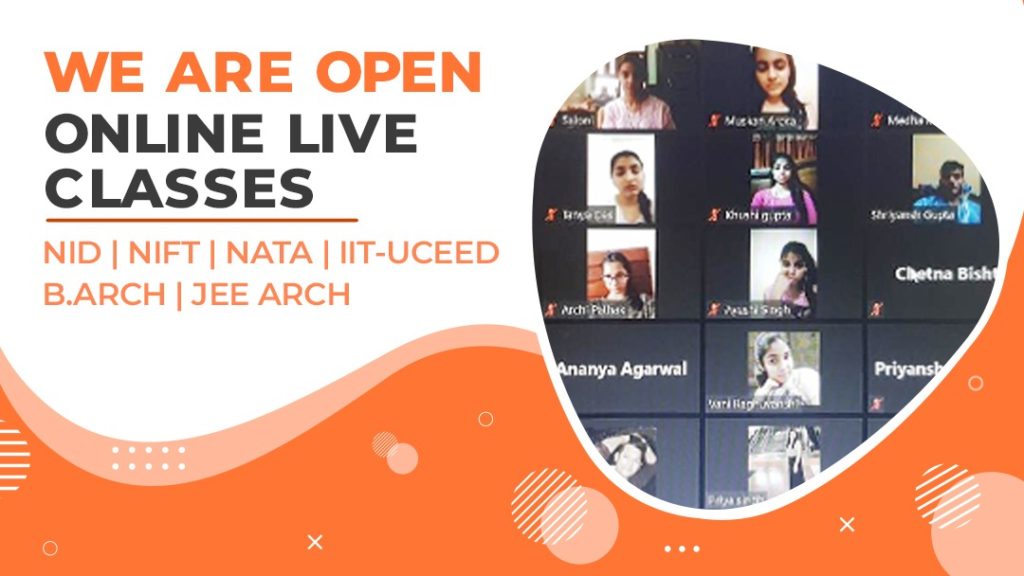
NID NIFT NATA UCEED CEED FINE ARTS Coaching in Chandigarh

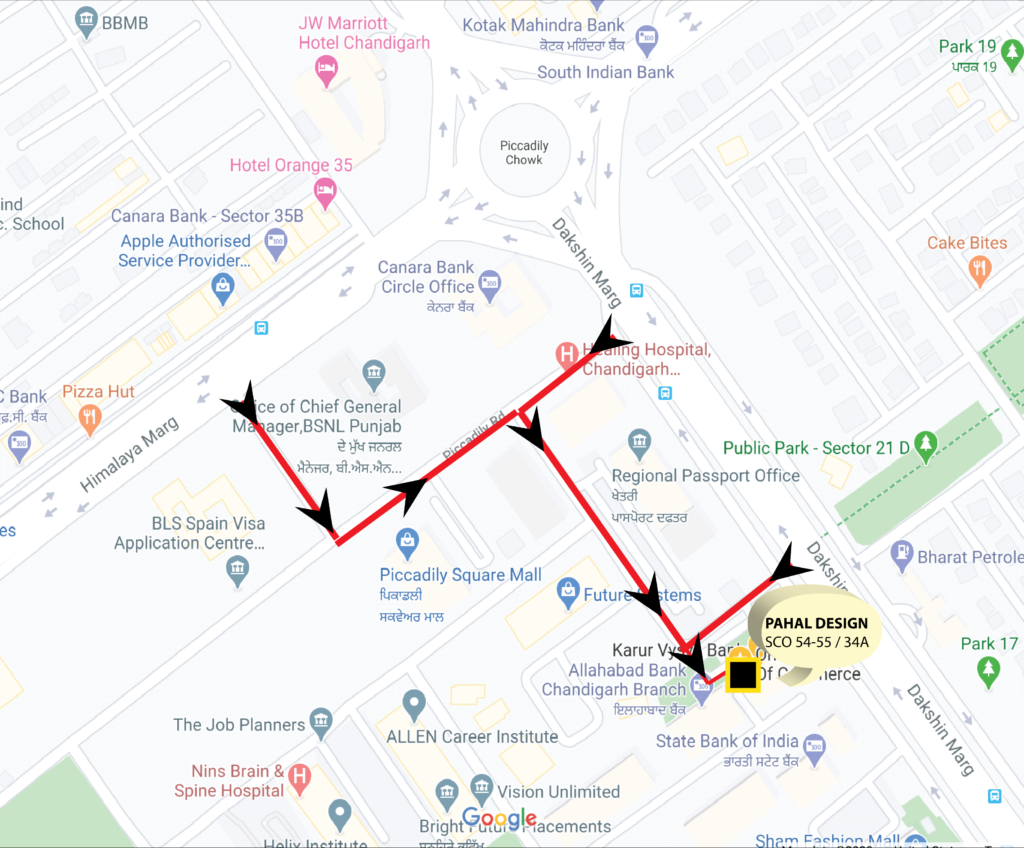
Pahal Design’s 36th Centre & 1st branch in Tricity located at: SCO 54-55 / 2nd Floor above Oriental Bank of CommerceSector 34A (Sub-City Centre Hub), Chandigarh. A walking distance of 100mts to 300mts from the Dhakshin& Himalaya Marg roads with landmark points as Mukut Hospital, Regional Passport Office, Piccadily Cinema / Chowk, BSNL office or International Women’s Polytechnic.

The centre is offering entrance coaching for all the reputed design colleges in India and overseas. The centre is equipped with highly experienced design educationalists, expert faculty and visiting faculties, preparing and counselling design careerenthusiasts for B.Des&M.Des entrance tests and professional career counselling for NID, NIFT, NATA, U/CEED, JEE-Arch and Fine Arts.

NATA / B.ARCH Coaching in Chandigarh

Our Offerings

UNDER GRADUATE

  • NIFT B.DES / BFTECH
  • NID – B.DES / GDPD
  • UCEED – B.DES
  • NATA
  • JEE ARCH
  • FINE ARTS

POST GRADUATE

  1. NIFT – M.DES / MFM / MFTECH
  2. CEED – M.DES
  3. GATE
  4. FINE ARTS

IIT – UCEED Coaching in Chandigarh

CHANDIGARH – CITY BEAUTIFUL, Union Territory and a Capital City of Punjab and Haryana. It has Punjab to the North, West, and South, and the state of Haryana to the East.
It is one of the early Planned Cities post-Independence and Internationally known for its Architectures and Urban design prepared and Swiss-French architect Le Corbusier. It is stated by BBC that Chandigarh as one of the few master-planned cities which combine Monumental architecture, Cultural growth and Modernisation.

Chandigarh has the highest per capita incomes and the cleanest in the country based on the National Government study. It is the happiest city in India over the Happiness index. The main occupations are Trade, Business, and Services. The city of Chandigarh also produced notable and famous personalities in all forms of professions…
The Metropolitan area of Chandigarh-Mohali-Panchkula now collectively forms Tri-City. The Tri-city includes New Chandigarh, Derabassi, SAS Nagar and Banur under its constitutional territory with a population of over 17.5 Lakhs. The City connects to Three National Highway Nos. 7, 152 and 5 connecting NH 44.

Chandigarh constitutes numerous educational institutions over a total of 115 government schools in Chandigarh. These include:

  • Punjab University
  • Post graduate Institute of Medical education and research (PGIMER)
  • Punjab Engineering College
  • Post Graduate Govt College
  • DAV College
  • Government Model Senior Secondary School
  • Jawahar Navodaya Vidyalaya
  • Bhavan Vidyalaya
  • St. Stephen’s School
  • St. John’s High School
  • St. Anne’s Convent School
  • St. Kabir Public School
  • St. Xavier’s Senior Secondary School
  • Carmel Convent School

How to Reach

Address:- SCO No. 54/55, 2nd floor, Sector 34 A, Chandigarh – 160022
Contact No: 9100404681 / 9810204681
Contact Person: Mr. Raja Pratap
Email: chandigarh@pahaldesign.com


ABOUT IIAD

Indian Institute of Art and Design in collaboration with Kingston University, London offers new-age design education to its students. The studio-based learning and hands-on Industry experience offers students the knowledge and exposure required to understand how the creative  industries function. Design is an intellectual subject that requires strong creative, visual, logical and critical thinking abilities and keeping that in mind, IIAD ensures a student-teacher ratio of 15:1 so that each student receives equal attention and assistance.

AFFILIATIONS

IIAD offers all its BA (Hons) degree programmes and MA* degree programmes in collaboration with Kingston School of Art, Kingston University, London. The courses at IIAD meet the quality standards and requirements of Kingston University. Both institutions share their resources and best practices for the development of the curriculum and the delivery of the courses. The academic collaboration with Kingston School of Art is the founding stone of the design pedagogy being taught at IIAD. It is known to be a pioneer in art and design education since the 1870s and has helped evolve the Institute’s comprehensive curriculum since inception. To help you understand the nature of this relationship and its benefits to the students, Kingston University has published a document answering queries from students and their families.

Are the degrees offered by IIAD recognised in India?

Yes, the degree offered at IIAD are recognised nationally and internationally. Apart from the degree offered by Kingston University, London, IIAD also offers a B.Voc degree in collaboration with Lingaya’s University which is UGC recognised. The degrees provided by IIAD can help the students in:

  • Applying at international institutes/universities for further education
  • Applying for jobs globally
  • Applying at UGC recognised universities in India for further education
  • Applying for Government jobs in India after completion of their degree programme

FEE AND SCHOLARSHIP

Students who successfully complete the iDAT Entrance Test will be eligible to apply for the Scholarship. The Scholarship form will be made available along with the offer letter.

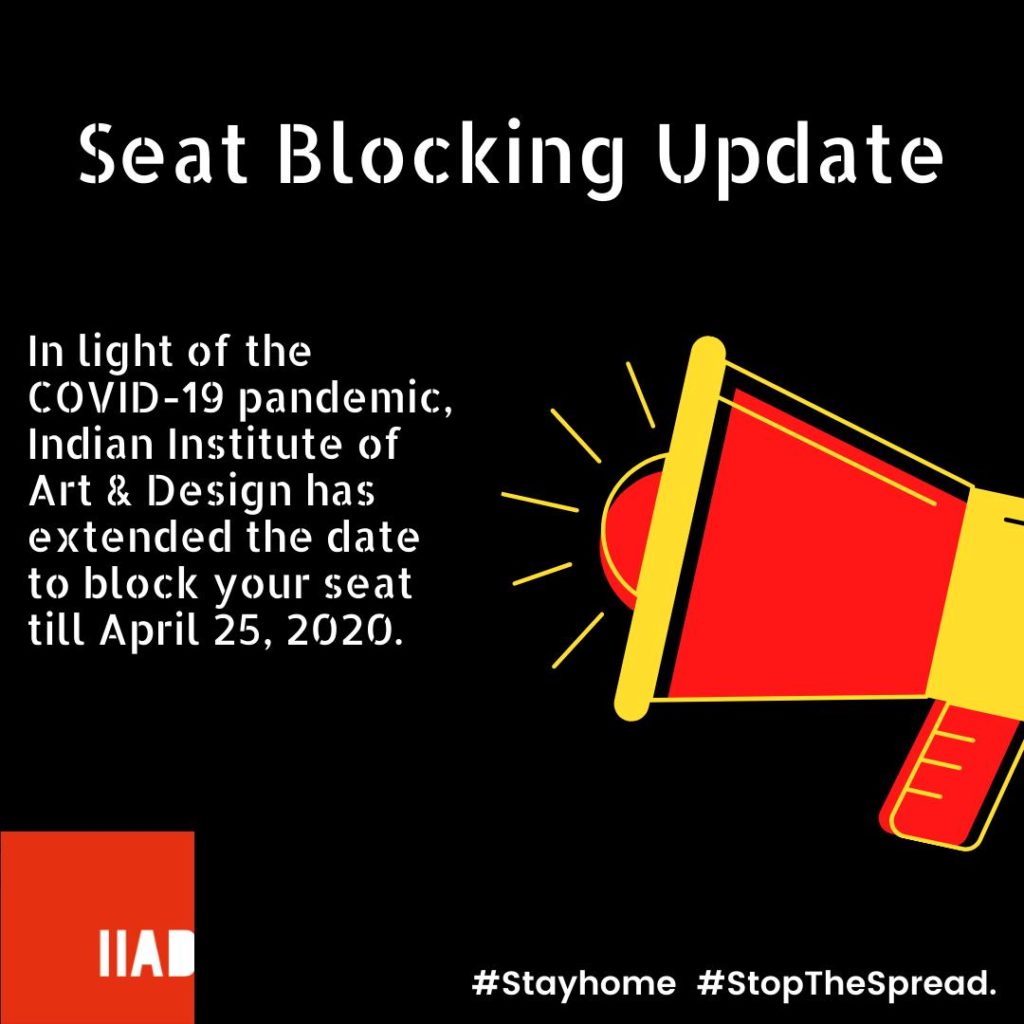
Cycle – April / May 2020

Announcement Details
Forms Available from   September 2019
Exam Centers and Dates   Online 
Friday 24th April, Saturday 25th April

For Undergraduate programmes : The IIAD Entrance Examination comprises the following parts/rounds based on the programme of interest. For Fashion Design, Communication Design and Interior Architecture & Design Applicants: iDAT – IIAD Design Aptitude Test

  • Part A – Written Test
  • Part B – Studio Simulation

 Part A – Written Test IIAD’s Design Aptitude Test (written) tests the applicants’ logical reasoning, creative thinking and visual aptitude. This is a written exam of 2 hours 30 mins. Students who appear in the written iDAT must also appear for a Studio Simulation at the IIAD campus in New Delhi. Part B – Studio Simulation ‘Studio simulation test’ is a two-hour activity in which a group of 10-15 students are given a brief along with the material. Candidates are required to create a 3D model using that material under the supervision of the faculty. They will be judged on the basis of teamwork, creative thinking, innovation & problem-solving skills.  

For Fashion Business Management Applicants: iMAT – IIAD Management Aptitude Test

  • Part A – Written Test
  • Part B – Personal Interview

IIAD’s Management Aptitude Test (iMAT) tests the applicants’ language, logical reasoning and analytical thinking. This is a written exam of 2 hours. Students who appear in written iMAT must also appear for a Personal Interview at the IIAD campus in New Delhi.   For Postgraduate programmes : The IIAD Entrance Examination comprises the following parts/rounds based on programme of interest.   For Fashion Design iDAT – IIAD Design Aptitude Test

  • Part A – Written Test
  • Part B – Personal Interview

iDAT is IIAD’s Design Aptitude Test which will test applicants’ logical reasoning, creative thinking and visual aptitude. This is a written exam of 2 hours 30 mins. Students who appear in the written iDAT must also appear for a Personal Interview at the IIAD campus in New Delhi.   For Fashion Business Management Applicants: iMAT – IIAD Management Aptitude Test

  • Part A – Written Test
  • Part B – Personal Interview

iMAT is IIAD’s Management Aptitude Test which will test applicants’ language, logical reasoning and analytical thinking. This is a written exam of 2 hours. Students who appear in written iMAT must also appear for a Personal Interview at the IIAD campus in New Delhi. The Sample Papers can be obtained upon successful completion of the Application Form.

B.A. (Hons.) Communication Design

The BA Communication Design programme (validated by Kingston University) is delivered through a mix of project work, group work, lectures, seminars and assignments. The program offers a common introductory experience during the first year of specialisation, followed by two years of selected and more specialised study driven by interests and preferences. The programme concludes with a Major Design Project in the last semester of the final year, this is an amalgamation of the specialisation and is defined by student’s own path as a future designer.

B.A. (Hons.) Interior and Architecture Design

At the intersection of architecture, interior and experience design, the Interior Architecture and Design programme provides a multi-disciplinary approach to transforming existing spaces and places.  In increasingly Urban Environments, the emphasis on the design and working of a building, inside out, has gained tremendous importance. The programme focuses on examining existing structures and transforming their interior through relevant design interventions and renovations that give existing buildings a new life.  

Unlike courses in interior design and decoration, the Interior Architecture programme focuses on spatial design and detailing, adaptive reuse and retrofitting as well as architectural addition and refurbishment.  

The programme addresses a wide range of spaces, from domestic to retail, institutional to  commercial and set/production design to issues of conservation. Whether designing a structure, situation or event, the interior architect responds to how society interacts with, and inhabits space.

B.A. (Hons.) Fashion Design

Fashion Design as a discipline has evolved from being a whimsical, wearer-led, phenomenon to an industry where designers and labels establish and guide customer preferences. A formal degree in Fashion Designing is ideal for students with a penchant for the creative fields and a desire to explore their artistic and technical skills in in an industry valued north of $3 trillion globally. The programme will help students explore their creative identity and refine it further as they unpack the myriad layers of the discipline. Fashion Design being a practical discipline demands rigorous hands-on exposure with a mature awareness of the complexities of the world of Fashion. Students graduating from the programme will be able to use design thinking and creative problem-solving strategies to create appealing, sustainable and responsible fashion for a rapidly evolving industry.

TRANSFER TO IIAD

IIAD accepts applications for transfer to IIAD for the design programme (in either Fashion Design, Communication Design or Interior Architecture & Design) from students who have successfully completed previous year(s) of their design degree/diploma programme from a nationally or internationally recognized Design Institute.

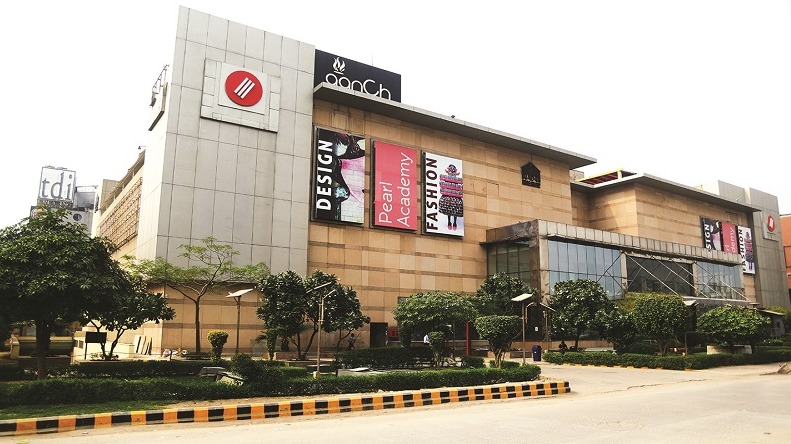
PEARL ACADEMY EXAM PATTERN AND PROCEDURE TO APPLY

QUALIFICATION
UNDERGRADUATE LEVEL

On successful completion of the program at Pearl Academy, students receive a Professional Diploma*. Pearl Academy facilitates enrolment of students for Indian and International Bachelor’s degree from recognized institutions.


(a) International Bachelor’s Degree
Students have an option to obtain an internationally recognized Bachelor’s Degree by pursuing programs at our academic partner universities i.e. University of Derby, UK or Torrens University, Australia or Manchester Metropolitan University, UK or Nottingham Trent University, UK. Pearl Academy facilitates enrolment to these universities. The application for international degree shall be subject to assessment / evaluation and acceptance of students prior learning by the partner academic university. The decision of the partner academic university shall be final & binding.


(b) Indian Bachelor’s Degree

All students at Pearl Academy Delhi NCR and Mumbai campuses are provided with an opportunity to pursue Bachelor of Arts from School of Open learning Delhi University and Institute of Distance and Open learning Mumbai University respectively. Students at Jaipur campus are provided with an opportunity to pursue Bachelor of Vocational Studies (B.Voc.) from Rajasthan ILD Skills University. Pearl Academy facilitates enrolment to these universities. For further details, students are requested to connect with Career Advisors.

*Pearl Academy is not a degree-granting institution and is not accredited by UGC, AICTE or any other regulatory body. Pearl Academy is also affiliated with Sector Skills Councils under National Skills Development Corporation (NSDC), an initiative by Ministry of Skills, Government of India, for following certifications. Students will have the added option for availing these qualifications. More certifications will be added.

Sector Specific Certificate
Fashion Design UG & PG Apparel Made-ups & Home Furnishing Sector Skill Council (AMHSSC)
Fashion & Lifestyle Business Management UG
Fashion Business
(Marketing & Merchandising)
PG
Textile Design UG & PG
Global Luxury Brand Management UG
Luxury Brands PG
Design (Fashion and Textiles) MA Diploma
Graphics and Communication Design UG & PG Media & Entertainment Skill Council (MESC)
Fashion Communication UG & PG
Professional Photography 11 Months Professional Certificate
Fashion Media Makeup 11 Months Professional Certificate Media & Entertainment Skill Council (MESC)


POSTGRADUATE LEVEL

On successful completion of two-year PG program, a student is awarded a Post Graduate Professional Diploma** from Pearl Academy. All students get to learn latest international trends through masterclasses by global experts and can also avail international student exchange programs. They get an opportunity to attend workshops, visit local factories / manufacturing units and interact with the industry experts of international market. **Pearl Academy is not a degree-granting institution and is not accredited by UGC, AICTE or any other regulatory body.

ADMISSION CYCLES

To cater to an increase in volume of applications each year and widen its pan-India reach, Pearl Academy offers more than 1 cycle for admission.
Please refer to the website www.pahaldesign.com for exam cycle dates.

We look out for talented, intelligent, ambitious students who are prepared to put in their best efforts to build the foundation for a successful and fulfilling career. We nurture young people who have the determination, potential and commitment to be the industry captains of tomorrow. So when we are assessing you, we will be particularly evaluating your career focus, your creative and aesthetic sense, your level of commitment and energy, your potential as a team member, your ability to handle stress, and of program, your communication skills.

For this purpose, every applicant passes through a 2-Stage Admission Process of written entrance test, followed by a personal interview. Applicant for 11 Months Professional certificate Program passes through 1 stage Admission process of Personal Interview only.

EXAMINATION PATTERN
UG Programs
Design Stream: General Proficiency Test (GPT) – 60 minutes and Design Aptitude Test (DAT) – 120 min Business Stream: General Proficiency Test (GPT) only – 60 minutes
Media & communication (Journalism & Entertainment): General Proficiency Test (GPT) – 60 minutes and Media Aptitude Test (MAT) – 120 minutes

PG Programs

Design Stream: General Proficiency Test (GPT) – 60 minutes and Design Aptitude Test (DAT) – 120 minutes
Business Stream: General Proficiency Test (GPT) only – 60 minutes
Media & communication (Journalism & Entertainment): General Proficiency Test (GPT) – 60 minutes and Media Aptitude Test (MAT) – 120 minutes

11 Month Professional Certificate Program

Personal Interview only

ELIGIBILITY FOR UG & PG

For 3 Year / 4 Year UG program: 10+2, in any discipline.
For 2 Year PG Program: Graduate in any discipline from a recognized university. For 11 Months Professional Certificate Program: 10+2 or equivalent

SELECTION OF CANDIDATES

Candidates are selected on Merit, based on their performance in the Written Admission Test and Personal Interview/ Portfolio Evaluation. The Program and centres will be awarded to successful candidates on the basis of their rank & preference. For 11 Months Professional certificate Program – Selection is based on personal interview only. Result is declared for each Admission cycle as per the cut off / grades and weights for norms decided by Admission / Selection committee of the Academy. Admission letter will be available online only with fee structure and necessary information. Candidates will be required to pay the fees by stipulated date to secure their seats. In case a successful candidate does not pay the fees within the stipulated date, the seat will be offered to other deserving candidates. In case a candidate is not selected or has not been offered his / her desired program or centres in any Admission Cycle, it is open to the candidate to apply afresh for the next Admission Cycle. The norms of the Selection are the sole prerogative of the Pearl Academy Admission / Selection Committee and the decision of the Admission / Selection Committee and the Management in matters concerning the admission process and selection will be final.

FOR WAIVER OF GENERAL PROFICIENCY TEST (GPT) & DESIGN APTITUDE TEST (DAT)

(A) Only for UG Program Applicants
NATA score card 2019 / 2020

Applicable only for 4 Year UG Program in Interior Design and 4 Year UG Program in Product Design Please enclose a copy of NATA scorecard 2019 / 2020 (whichever applicable) along with the Application form.

(B) Only for PG Program Applicants

Applicants of PG Program are entitled to waiver of General Proficiency Test (GPT) only if they have registered a minimum score as mentioned below. Such applicants will be called for Personal Interview directly subject to submission of valid scores.
• AIMA – MAT (2019 / 2020)

  • CAT (2019 / 2020)
    • GMAT (2019 / 2020)
    The minimum scores of MAT / CAT / GMAT for a waiver of GPT required are as under: • Minimum MAT score of 500 or above
    • Minimum CAT score of 60 percentile or above
    • Minimum GMAT score of 450 or above

Please Note: Applicants seeking waiver of GPT are required to enclose an attested copy of the relevant valid Score Card along with this application form. In the absence of a copy of valid score card, waiver will not be accepted and the applicant will be required to appear in the GPT. Applicants of Design stream, who are allowed waiver of GPT, will be required to appear for Design Aptitude Test (DAT). Applicants of Media & Communication (Journalism & Entertainment) programs, who are allowed waiver of GPT, will be required to appear for Media Aptitude Test (MAT). Decision to grant waiver of GPT rests with Pearl Academy. Waiver of GPT is not automatic.

Merit cum Means Scholarships – New Entrants

The Merit cum means scholarship is constituted to support the deserving economically less privileged students joining Pearl Academy’s programs each year. The objective of this Scholarship is to support & reward new students constrained by economic limitations.
The Merit cum Means Scholarship (new entrants) is applicable only to the new enrollments / students of regular UG / PG Programs at the time of admission.

The Scholarship provides partial waiver of tuition fee. It waives payment of partial tuition fee only for the current academic year in the following categories:
a. Category-1 : 50% waiver of Tuition fee
b. Category-2 : 25% waiver of Tuition fee

Eligibility

Eligibility for Merit cum Means Scholarship (new entrants) is as under:
a. Annual gross parental / family income from all sources – maximum Rs. 8,00,000/- (INR Eight

lakhs only)
b. Academic Performance in 12th / Graduation ( Min 55% marks ) c. Academic Performance in Entrance test
d. Preference towards of single parents.

NOTE: There is no concept of automatic renewal. The students need to apply afresh in subsequent academic year.

Merit Scholarship (Existing Students – Program Toppers)

Merit Scholarship will be awarded annually only to meritorious students progressing to L1, L2 & L3 of 4-Year UG programs and Year-2 of PG program.
• The Merit Scholarship provides partial waiver of tuition fee. It waives payment of 60% of the tuition fee only for the current academic year

Eligibility

The meritorious students of the respective cohorts at each campus, subject to class size of minimum 30 students. Merit Scholarship for the program topper is subject to achieving minimum prescribed standard of achievements as under:
• 4- Years UG program: Min 70% marks in previous academic year at Pearl.

  • 2 – Years PG program : Min 70% marks in previous academic year at Pearl
    • No disciplinary proceedings against the proposed awardee
    *In case class strength is below 30, then classes across campuses will be combined ( minimum total eligible for scholarship is 25 ) and the Merit Scholarship will be awarded to the Topper (1st Rank) subject to achieving the minimum performance criteria as follows:
    • 4 Years UG program : Min. 70% marks in previous academic year at Pearl Academy
    • 2 Years PG program : Min. 70% marks in previous academic year at Pearl Academy

Means Scholarship (Existing Students)

The scholarship is constituted to support the deserving students who are economically less privileged or are facing unforeseen economic crisis each year. The objective of this Scholarship is to support & reward our students constrained by economic limitations.
There are two categories:

  • Category 1 : 70% waiver of Tution fee
  • Category 2 : 50% waiver of Tution fee
    Eligibility
    Annual gross parental / family income from all sources – maximum Rs. 8,00,000/- (INR Eight lakhs only)
    b. Preference to wards of Single parents
    c. Min. 70% attendance and Min. 55% marks
    d. No disciplinary proceedings against the proposed awardee
    Based upon the above stated eligibility criterions, individual applicants shall submit their request for Means Scholarship in the prescribed format along with the following documents:
    a. In case of student having single parent, please provide relevant supporting documents
    b. A copy of Parents ITR, Form 16 / Balance sheet of last 2 years as proof of income.
    NOTE: There is no concept of automatic renewal. The students need to apply afresh in subsequent academic year
    Notwithstanding anything under this Scholarship, Pearl Academy’s Management has right to continue or abandon this Policy going forward at any given point in time, without any prior written intimation. The Scholarship committee will be the final deciding authority for all scholarship decisions. Please note that this communication is without prejudice to any rights of Pearl Academy and this communication should not be considered as waiver of any rights of Pearl Academy in your favor.
    General Rules for Scholarship (all categories)
  • A student will be eligible for award of only one type / scheme of Scholarship in a given Academic Year.
  • The scholarship amount will be adjusted against student fees. No cash or separate cheques will be Issued in Student’s favour.
  • In case of a joint winner / topper, the topper will be decided based on the exact LAM including 2 decimal points (before rounding off).
  • The Academy reserves the rights to edit /modify / change or update the contents of this policy at its sole discretion.
  • The students will be covered under the latest revisions of the policies irrespective of their year of joining.
  • For all scholarships, decision of the Scholarship committee will be final & binding.
  • In case of withdrawal under Scholarship category, scholarship granted shall get withdrawn and refund shall be granted as per the normal fee structure.

HOW DO YOU APPLY:

ONLINE

Candidates can apply online at www.pearlacademy.com. Guidelines for applying online may be referred for the purpose. The Prospectus is available at Pearl website free of cost.
APPLICATION FEE PAYMENT
There are three options of making payments for application form

Credit Card / Debit Card – Candidates applying online through Credit / Debit card are not required to send print out of the application form.
Cash on Counter – Candidates applying online through Cash mode are required to send print-out of the application form and send it along with the cash amount of `1500. Please paste your recent passport size photograph on the application form, sign it and send it to the below mentioned address along with cash before the last date of form submission.

Demand Draft – Candidates applying online through Demand Draft are required to send print-out of the application form and send it along with the Demand Draft of `1500. Please paste your recent passport size photograph on the application form, sign it and send it to the below mentioned address along with the Demand Draft before the last date of form submission.

Note: Candidates are advised to keep the following ready with them before applying online:
• Credit / Debit Card or Cash on counter OR Demand Draft (Demand Draft must be in favour of “CREATIVE ARTS EDUCATION SOCIETY”, payable at New Delhi)
• Scanned copy of passport size photograph [The photograph must be a recent passport size color picture,

preferably in white background. Photographs with Caps, hats and dark glasses are not acceptable.

The image should be in .jpg format only. Size of file should not be more than 1 MB]. • Scanned copy of valid CAT / MAT / GMAT / NATA score card (if applicable)
• Details of educational qualifications (marks / grade / year of passing etc.)

FOR ANY FURTHER DETAILS GET IN TOUCH WITH OUR TEAM AT 8800-22-6864 / 90311-70312 / 93540-52529



WhatsApp Enquiry